.jpg)
Electric toothbrush quality control process design is a core factor for brands sourcing OEM or ODM manufacturing partners. As electric toothbrushes integrate motors, batteries, and electronic systems, consistent quality control directly affects product reliability, compliance success, and brand reputation. For B2B buyers, quality control is not a final inspection step. Instead, it is a structured system covering the entire manufacturing lifecycle. Importance of a Structured Quality Control Process A professional electric toothbrush quality control process begins before production starts. Material sourcing, supplier qualification, and component inspection form the first defensive layer against defects. Moreover, early-stage quality management reduces rework, warranty claims, and shipment delays. For international buyers, this proactive approach protects both cost structure and market credibility. As global platforms tighten compliance requirements, documented quality systems become increasingly important. Incoming Material and Component Inspection Quality control starts with incoming inspection. Motors, batteries, PCBA, and plastic housings are checked against approved specifications. Furthermore, critical components undergo functional sampling to verify vibration output, voltage stability, and charging behavior. These checks ensure that substandard parts do not enter the assembly line. Manufacturers with strong supplier management programs maintain consistent quality even during volume expansion. In-Process Quality Control During Assembly During production, in-process inspections…
Electric toothbrush shipping solutions are a vital component of global OEM and wholesale operations. Because electric toothbrushes contain batteries and electronic components, shipping planning must address safety, compliance, and cost efficiency simultaneously. For B2B buyers, optimized logistics reduce delivery risk and support predictable supply chains. Challenges in Shipping Electric Toothbrush Products Electric toothbrushes are typically classified as battery-powered consumer electronics. A professional electric toothbrush shipping solutions strategy considers packaging integrity, regulatory documentation, and transport mode selection. Without proper planning, shipments may experience customs delays or additional inspection costs. Understanding these challenges early helps buyers avoid disruptions. Export Packaging and Product Protection Protective packaging plays a central role in shipping safety. Inner trays, cushioning inserts, and moisture barriers protect products from vibration and compression during transit. Additionally, outer cartons are designed to withstand stacking pressure during sea and air freight. Proper packaging reduces damage rates and improves delivery reliability. Battery Documentation and Regulatory Compliance Battery-powered products require specific documentation. MSDS reports, UN38.3 test summaries, and battery labels are commonly required for international shipping. Reliable manufacturers assist buyers with documentation preparation and verification to ensure smooth customs clearance. General guidance on lithium battery transport can be referenced through IATA standards:https://www.iata.org/ Logistics Coordination…
electric toothbrush production capacity is a decisive factor for brands sourcing long-term OEM or ODM partners. As demand fluctuates across regions and seasons, buyers increasingly evaluate suppliers based on their ability to scale output without compromising quality. For B2B buyers, production capacity reflects not only volume, but also process stability and supply reliability. What Defines Reliable Production Capacity A professional factory’s electric toothbrush production capacity depends on multiple factors. These include automated assembly lines, trained workforce availability, and stable component sourcing. Moreover, factories with modular production lines can adjust output based on order volume. This flexibility allows buyers to start with pilot orders and scale efficiently as demand grows. Consistent capacity planning helps prevent delivery delays and quality inconsistencies. Manufacturing Infrastructure and Output Control Advanced production facilities typically integrate injection molding, assembly, and testing within one workflow. This integration reduces dependency on external suppliers and improves lead-time control. In addition, capacity planning software and standardized work instructions help factories maintain consistent output during peak seasons. Powsmart operates export-focused production lines designed to support stable electric toothbrush manufacturing for international buyers. Manufacturing capabilities can be explored at:https://www.powsmart.com/ Quality Assurance at Scale High production capacity must be matched with robust quality control.…
Electric toothbrush compliance standards are a critical consideration for brands, importers, and OEM buyers operating in regulated international markets. As electric toothbrushes are classified as electrical consumer healthcare devices, compliance directly determines whether a product can be legally sold, listed, or distributed. For B2B buyers, understanding regulatory requirements early helps prevent shipment delays, rejected listings, and costly redesigns. Why Compliance Standards Matter in Electric Toothbrush Manufacturing Electric toothbrushes integrate motors, batteries, and electronic control systems. As a result, they must meet multiple regulatory frameworks covering electrical safety, material safety, and electromagnetic compatibility. For global brands, electric toothbrush compliance standards are not optional checkpoints. Instead, they form the foundation of sustainable market access across regions such as the EU, North America, and Asia-Pacific. Moreover, distributors increasingly require documented compliance before onboarding new suppliers. Core Compliance Requirements for Electric Toothbrushes Most markets require certification aligned with CE, FCC, and RoHS directives. These standards evaluate electrical safety, emissions, and hazardous substance restrictions. In addition, waterproof ratings such as IPX7 are often expected for bathroom-use devices. These tests ensure safe operation under wet conditions. Battery compliance also plays a key role. Lithium battery testing and transport documentation help prevent logistics issues and customs rejection.…
Toothbrush motor supplier China sourcing is a key decision for electric toothbrush manufacturers and OEM brands. The motor directly determines vibration strength, noise level, and long-term durability. For B2B buyers, selecting the right motor supplier influences product positioning, cost structure, and customer satisfaction. Role of Motors in Electric Toothbrush Performance Motors are the core driving component of electric toothbrushes. Their speed stability, torque output, and lifespan affect brushing effectiveness and user experience. A professional toothbrush motor supplier China typically offers multiple motor types, including standard DC motors and magnetic levitation solutions. Each motor category supports different product tiers, from entry-level models to premium sonic toothbrushes. Why China Is a Preferred Motor Sourcing Base China’s motor manufacturing ecosystem provides strong advantages. Mature supply chains, automated production lines, and large-scale output support consistent quality at competitive cost levels. Additionally, Chinese motor suppliers often work closely with toothbrush OEM factories. This integration reduces compatibility issues and simplifies product development. Moreover, many suppliers offer customization options such as shaft length, vibration frequency, and noise optimization. Supplier Evaluation for B2B Buyers When sourcing from a toothbrush motor supplier China, buyers should evaluate motor lifespan testing, noise control performance, and batch consistency. Reliable suppliers provide test…
.jpg)
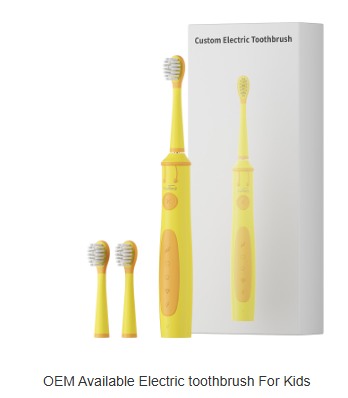
If your brand is planning to launch a kids electric toothbrush, choosing the right partner matters more than ever. A trustworthy toothbrush manufacturer China will deliver not only attractive design and cost-effective production, but — critically — child-safe materials, robust electronics, and regulatory support. Below is a B2B-focused guide that explains what to expect and what to ask for when sourcing a kids electric toothbrush from China. At a glance — 6 essential considerations Child-first product design & material safety Battery and electronics reliability Waterproofing & mechanical durability for kids’ use Customization, tooling & manufacturing capabilities Testing, certifications and regulatory support Supply chain logistics, MOQ and after-sales service Each point is expanded below so you can use this as a checklist when vetting a toothbrush manufacturer China for your kids electric toothbrush project. Child-first product design & material safety First and foremost, a kids electric toothbrush must be designed around children’s mouths and behavior. Look for a manufacturer that offers: Small, ergonomically shaped brush heads sized for kids, with extra-soft bristles and rounded tuft tips. Non-toxic, food-contact-grade materials for any part that touches the mouth (handles, brush head necks). Age-segmented design (toddlers vs. school-age) and visual/ tactile cues parents trust…
.jpg)
Partner with a Leading ODM Electric Toothbrush Manufacturer from China In the competitive global oral care market, securing a reliable and innovative manufacturing partner is crucial for brand success. Powsmart stands as a premier ODM electric toothbrush manufacturer and supplier based in the industrial hub of Shenzhen, China. We empower global brands, including those in markets like the United States, Europe, and Australia, with high-quality, custom-designed electric toothbrushes that meet the specific demands of their customers. While our clients and their brands are local to you, the engineering and production excellence behind their products are rooted in our state-of-the-art factory in China. This synergy allows us to deliver products that rival leading brands in features and performance, but with the flexibility and cost-efficiency of a direct ODM toothbrush factory partnership. Why Global Brands Choose Our ODM Electric Toothbrush Solutions Our design and engineering philosophy is to integrate the most sought-after features into our ODM models, providing a superior value proposition. Our product development is driven by global market trends and consumer preferences. Key Product Advantages & Features: Advanced Sonic Technology: Our brushes utilize high-frequency sonic vibrations, typically ranging from 31,000 to 40,000 strokes per minute, to effectively break up plaque and promote healthier gums. Multiple Cleaning…
Electric Toothbrush Sample Lead Time in OEM Manufacturing Electric toothbrush sample lead time is one of the most common concerns for B2B buyers during early project discussions. Whether you are developing a private-label product or a fully customized design, sample timing directly impacts testing, certification, and market launch plans. Understanding what affects sampling schedules helps buyers set realistic expectations and avoid unnecessary delays. Typical Sample Lead Time Scenarios Sample timelines vary depending on project complexity. For existing models with logo customization only, samples can often be prepared within 7–14 days. However, projects involving structural changes, new molds, or upgraded components usually require longer preparation. In private mold or semi-custom projects, electric toothbrush sample lead time typically ranges from 25 to 45 days, including engineering validation and trial assembly. Factors That Influence Sampling Speed Product Customization Level The more changes required, the longer the sampling cycle. New housing designs, battery upgrades, or motor replacements all require additional verification steps. Tooling Availability Projects using existing molds move faster than those requiring new tooling. Mold fabrication alone can take several weeks before first trial samples are ready. Component Supply Chain Motor availability, battery lead times, and PCB programming can also affect sampling schedules.…
Electric Toothbrush Packaging Compliance Overview Electric toothbrush packaging compliance is a critical requirement for OEM brands selling across borders. Packaging is not just a marketing element—it is a regulated component of the product. Failure to meet packaging standards can result in customs rejection, product recalls, or marketplace listing removal. Key Compliance Elements in Packaging Labeling Accuracy Mandatory information such as voltage, manufacturer details, country of origin, and safety warnings must be clearly displayed. Language requirements vary by market and must be strictly followed. Regulatory Marks Compliance marks like CE or recycling symbols must be printed according to official size and placement guidelines. Incorrect usage may be considered non-compliance. Market-Specific Packaging Rules Different regions impose different packaging obligations. The EU emphasizes environmental and recycling compliance, while North America focuses on safety labeling and traceability. Therefore, packaging artwork should be reviewed separately for each target market. Role of OEM Manufacturers Professional OEM suppliers review packaging files before mass production. This step reduces errors and ensures alignment with product certification documents. At Powsmart, packaging review is integrated into pre-production checks. You can explore compatible OEM packaging solutions here:👉 https://www.powsmart.com/private-label-electric-toothbrush/ Sustainability & Environmental Considerations Many markets now require compliance with packaging waste regulations. Reduced…
Electric Toothbrush Warranty Policy in OEM Cooperation An effective electric toothbrush warranty policy plays a critical role in B2B cooperation between brands and manufacturers. Unlike consumer-facing guarantees, OEM warranty terms focus on defect responsibility, batch consistency, and long-term risk control. For private label and ODM buyers, clarifying warranty conditions early helps prevent disputes once products enter the market. Why Warranty Policy Matters for B2B Buyers In OEM projects, after-sales issues often involve entire batches rather than individual units. Therefore, warranty terms must clearly define coverage scope, defect definitions, and claim procedures. Moreover, warranty responsibility directly impacts cost structure and customer satisfaction. A vague agreement may increase hidden risks after shipment. Key Elements in an OEM Warranty Framework Coverage Scope & Duration Most manufacturers offer 12–24 months of warranty for electric toothbrushes. Coverage usually includes functional defects related to motors, PCBA, or battery performance under normal use. However, wear parts such as brush heads are typically excluded due to their consumable nature. Defect Rate Threshold OEM contracts often define an acceptable defect rate (e.g. below 0.5%). Issues beyond this threshold may trigger compensation, replacement, or credit arrangements. Claim Handling Process Clear documentation requirements — including photos, videos, and batch numbers —…


.jpg)
.jpg)
.jpg)
.jpg)
.jpg)



.jpg)