Choosing the right technology for your oral-care product line is one of the most important strategic decisions for any brand preparing to enter or expand in the electric toothbrush market. For OEM brand owners, the choice between a rotating vibrating toothbrush design can significantly influence market positioning, product differentiation, production cost, and long-term brand value.
Below, we explore six key considerations to help you determine which technology aligns best with your OEM brand strategy and how customized manufacturing partners can support your success.
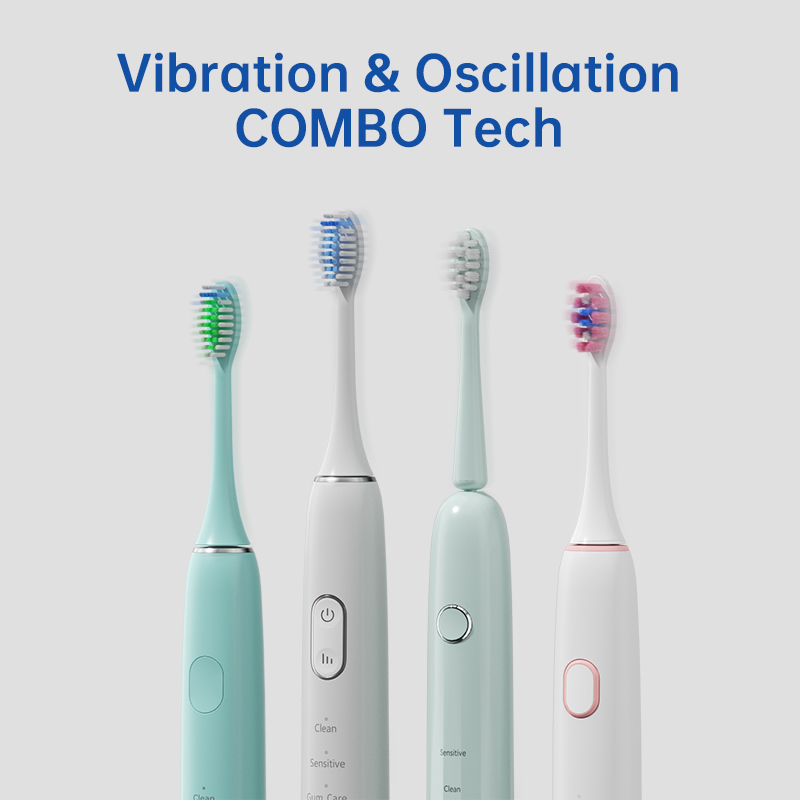
Rotating and vibrating toothbrushes operate on different mechanical principles, each offering unique advantages.
Rotating toothbrushes use circular oscillation motions and are popular for deep plaque removal.
Vibrating (or sonic) toothbrushes rely on high-frequency vibrations that create dynamic fluid action, improving cleaning effectiveness even between tight gaps.
Recognizing how each technology impacts user experience is the first step in shaping a product line that resonates with your target consumers.
Your choice should align with consumer expectations in your target region.
Rotating toothbrushes often appeal to customers seeking a “power cleaning” feel.
Vibrating models are preferred by those who want a more gentle yet efficient cleaning approach.
Understanding these preferences will help you position your product correctly within your OEM brand strategy, ensuring it meets the psychological and practical needs of end-users.
Superior brushing performance remains the key selling point for any electric toothbrush. For OEM brands, this can become your strongest marketing advantage.
Rotating heads excel in tackling surface stains and heavy plaque buildup.
Vibrating mechanisms offer enhanced gum friendliness and improved fluid dynamics for hard-to-reach areas.
Partnering with a manufacturer that conducts testing and provides performance data can strengthen your product claims and improve overall market confidence.
To stand out in a competitive market, OEM brands must prioritize customized solutions. Modern factories can offer:
Tailored motor RPM and vibration frequency
Unique brush-head designs
Branding elements such as handle shape, color themes, and packaging
App connectivity for smart brushing guidance
Choosing the right technology (rotating or vibrating) becomes far more strategic when combined with these customization layers.
Cost-effectiveness plays a major role in determining product viability.
Rotating toothbrushes may have simpler structural components, leading to lower entry-level cost.
Vibrating toothbrushes, especially high-frequency sonic models, may require more precise engineering.
A reliable manufacturing partner can help balance performance targets with cost efficiency while maintaining flexible MOQ options suitable for your OEM brand strategy.
Finally, consider how each technology fits into your long-term product expansion.
Rotating models can form the foundation for budget-friendly lines.
Vibrating models can serve as your premium or smart product tier.
By strategically blending both types into your portfolio, you can form a sustainable product roadmap that supports brand growth, customer loyalty, and future innovation.
Both rotating and vibrating toothbrush technologies offer compelling benefits. The best choice depends on your target audience, desired brushing performance, cost expectations, and long-term OEM brand strategy. With the right manufacturing partner offering customized solutions, you can develop distinctive, high-quality toothbrush products that maximize your brand’s competitive advantage.
.jpg)
Smart Toothbrush with Bluetooth Bulk | Connected Oral Care for B2B Clients
Battery Powered Electric Toothbrush Bulk | Reliable B2B Supplier
Why Include a Teeth Shade Guide with a Professional Salon Whitening Device?
Secrets of Electric Toothbrush Combined with LEDs
personalized electric toothbrush OEM
Refining Your Toothbrush Sourcing Strategy?
Is a Leak-proof Valve a Critical Component in a Desktop Irrigator Design?
Electric Toothbrush Parts & Accessories Supplier | OEM Replacement Components
Can Cavitation Cleaning Technology Achieve Optimal Results with a Micro-perforated Brush Head Design?
Can a Whitening Booster Solution Be Promoted Through an App-connected Toothbrush Developer?
Top Five “Must-Have” Design Features for Electric Toothbrush Customization — Plus One Bonus Insight for OEM Success
Water Flosser with UV Sanitizer ODM | Smart Oral Care Solutions
How Can a Reliable Brush Head Supply Chain Support a Subscription Business Model?
How Can a Sonic Toothbrush Manufacturer Collaborate on Portable Water Flosser Designs for Travel-Friendly Oral Care?
How to Manufacture Your Electric Toothbrush Vision with the Right OEM Partner
Do U-shaped Toothbrushes Actually Work? An OEM Manufacturer’s Analysis


.jpg)
.jpg)
.jpg)
.jpg)
.jpg)