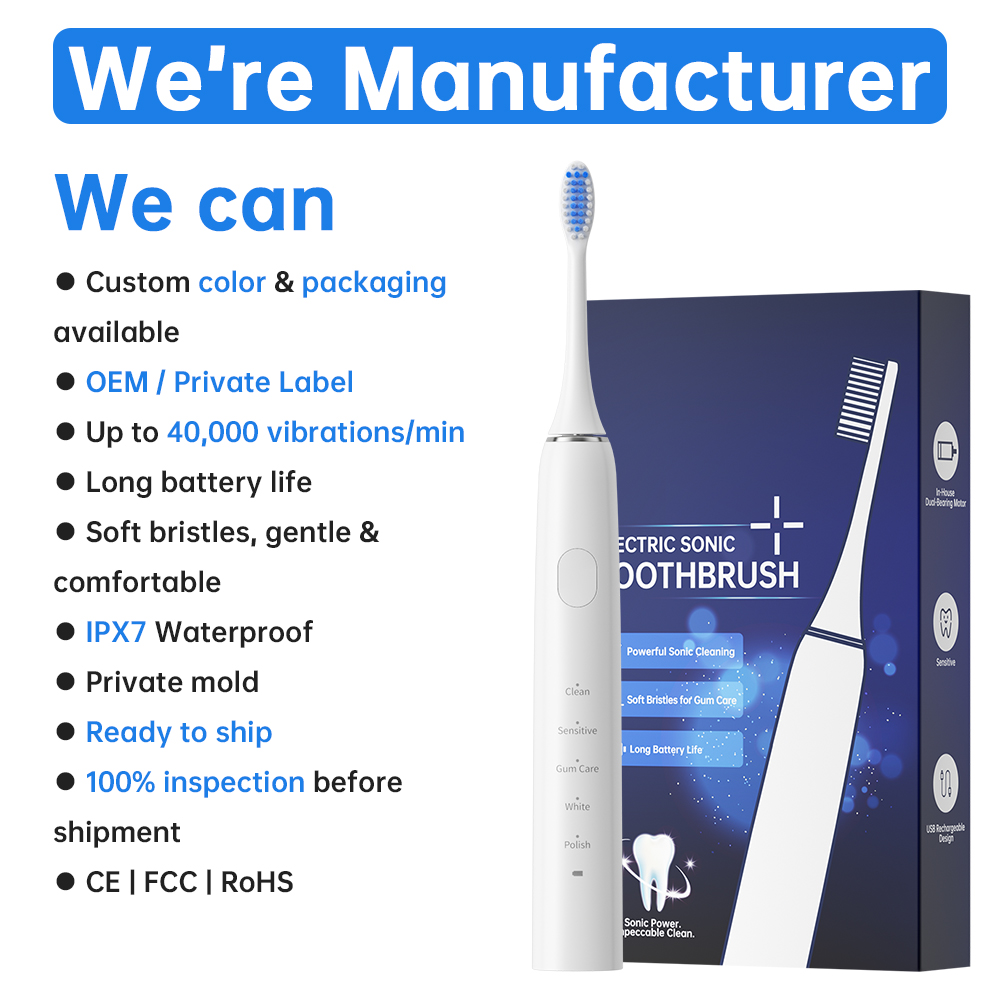
For brands exploring an OEM electric toothbrush, one question comes up often: Is high-frequency vibration safe for sensitive gums and teeth? In fact, many modern toothbrushes now use 40,000 vibrations per minute to improve plaque removal and brushing efficiency.
However, this level of power can raise concerns—especially for users with sensitive teeth. Therefore, for oral care brands targeting comfort-conscious consumers, balancing cleaning performance and gentle brushing is essential.
At first, 40,000 vibrations per minute may sound aggressive. Yet, this frequency is widely used in leading toothbrush designs. Why? Because it helps remove plaque more effectively, particularly along the gum line and between teeth.
Moreover, with the right bristle design and motor control, this speed can still feel gentle. For example, soft bristles combined with rounded brush heads reduce irritation. Therefore, high-frequency vibration doesn’t always mean harsh brushing—it depends on how it’s implemented.
Not every user tolerates intense vibration well. For those with sensitive teeth or gums, discomfort may arise if the brush lacks customization.
Fortunately, many OEM electric toothbrush designs now include multiple brushing modes. Users can switch between settings like “Clean,” “Sensitive,” or “Massage.” Additionally, flexible brush heads and soft silicone materials improve comfort. These features make gentle brushing possible, even at high frequencies.
If you’re a brand looking to offer a well-balanced toothbrush, your manufacturer matters. A capable OEM electric toothbrush supplier should support adjustable vibration levels and ergonomic brush heads.
Furthermore, they should understand the needs of users with sensitive gums. Ask whether they provide mode testing, flexible motor specs, or bristle customization. This ensures the toothbrush not only cleans deeply, but also protects oral comfort.
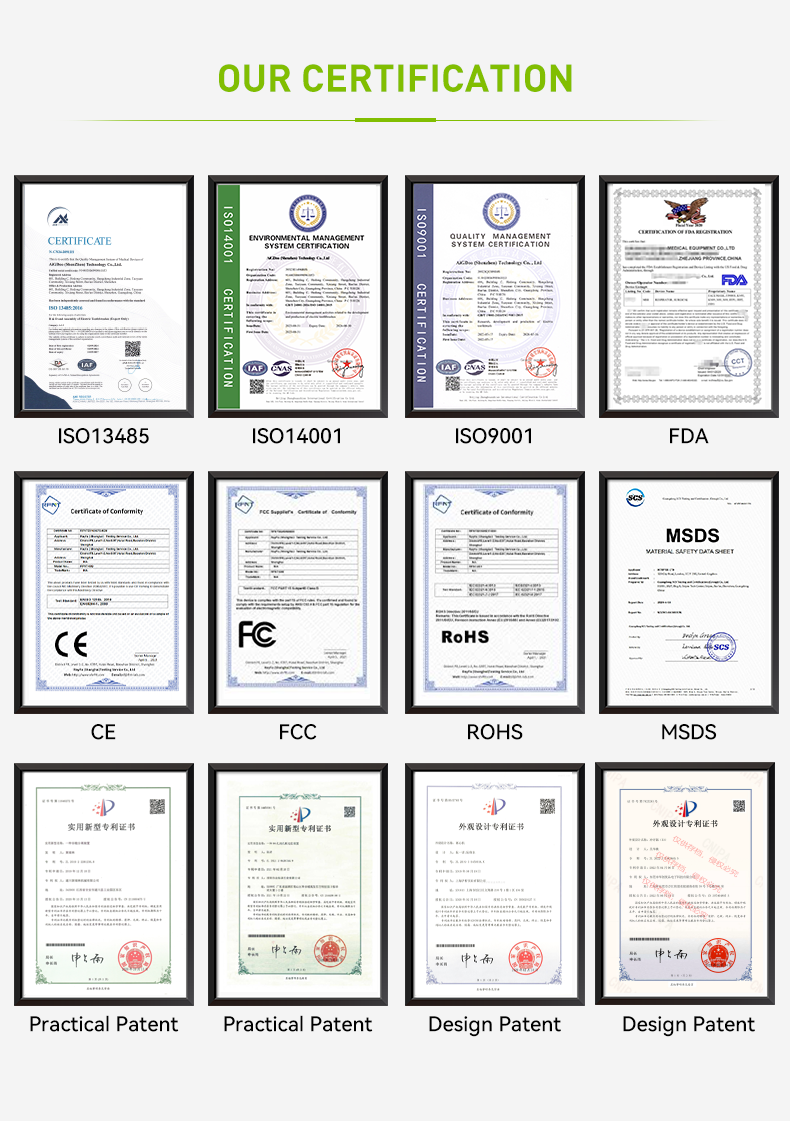
Safety isn’t just about product specs. It also involves compliance and real-world testing. A professional manufacturer should meet certifications like CE, FDA, and RoHS.
Additionally, brands should request user feedback or clinical trial data. This helps verify that high-frequency vibration doesn’t harm gums or irritate sensitive teeth. Therefore, collaboration with a quality-driven factory is critical.
So, is high-frequency vibration harmful to gums? Not necessarily. When engineered correctly, it offers excellent cleaning while remaining gentle.
For oral care brands, the solution lies in selecting a skilled OEM electric toothbrush manufacturer. One that offers both customizable power and soft-touch design. In doing so, your brand can confidently serve both mainstream users and those needing extra care.
.jpg)
San Diego Electric Toothbrush Wholesale

Why integrate a Leakage Prevention Valve with a Quiet Flosser Motor for user comfort?
Best Electric Toothbrush for Baby Teeth Protection – OEM Services
Can a Rechargeable Battery Solution power an LED Display Module efficiently in flossers?
Why is Quality Certification Support integral to a successful Contract Manufacturing agreement?
Can Mold Development Service Unlock a Truly Unique Custom Branding Solution?
Can Mold Development Service Reduce Costs Through Efficient Bulk Material Sourcing?
Space-Saving Oral Care: Compact Electric Toothbrush Designs
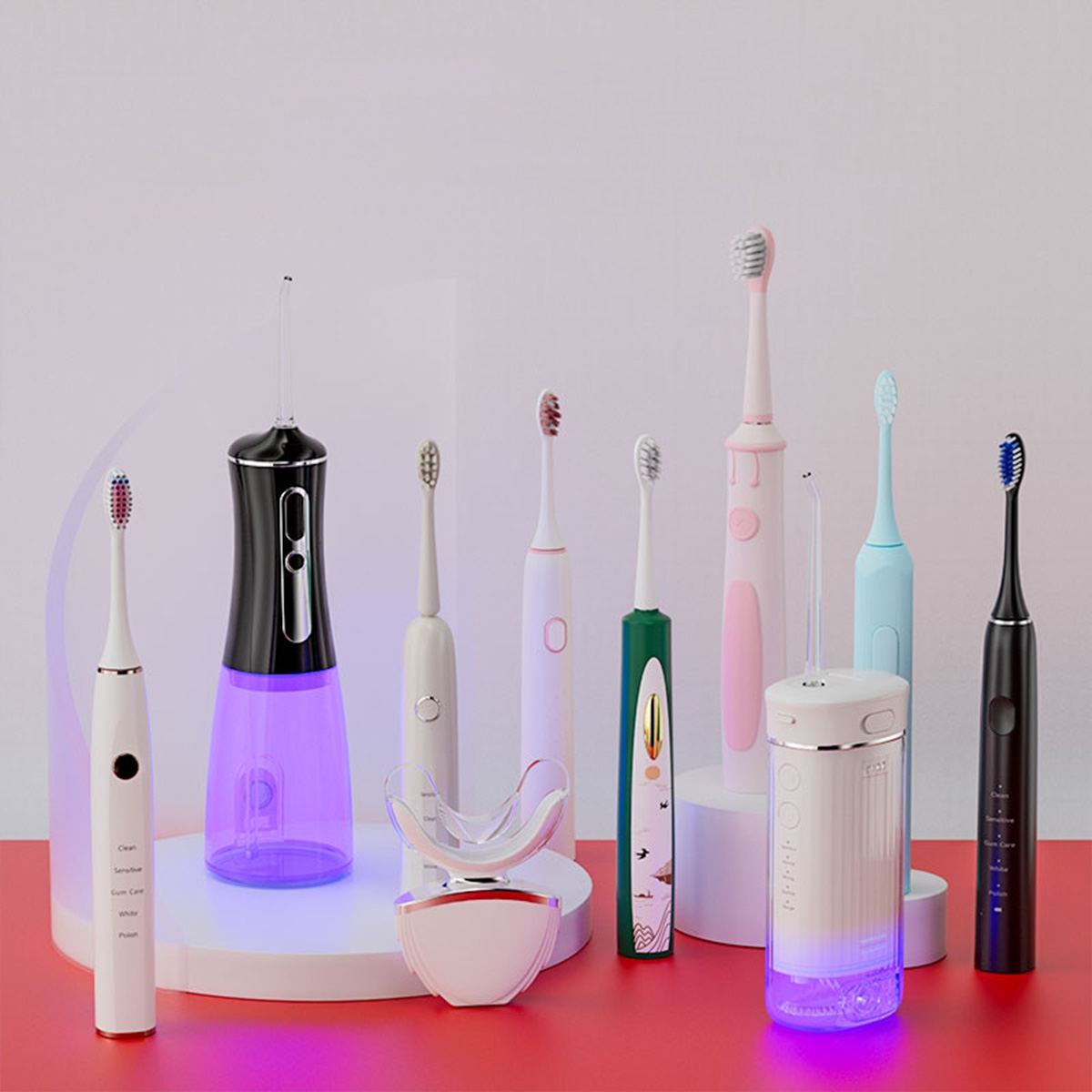
Electric Toothbrush + Water Flosser Combination: How Can Brand Owners Enhance Competitiveness Through This Bundle?
Gel Leakage Causing Chemical Burns – Still Ignoring It?
Is Tooth Sensitivity with Enamel Erosion Whitening’s Side Effect?
Phoenix Electric Toothbrush Wholesale
Motor Overheating alongside Device Overheating – Double Danger?

Why Is Flow Rate Calibration Critical for a Precise Pressure Control System?

Four Core Factors Brand Owners Must Pay Attention to When Choosing Competitive Water Flossers
Waterproof Electric Toothbrush OEM Manufacturing for Global Brands


.jpg)
.jpg)
.jpg)
.jpg)
.jpg)



.jpg)