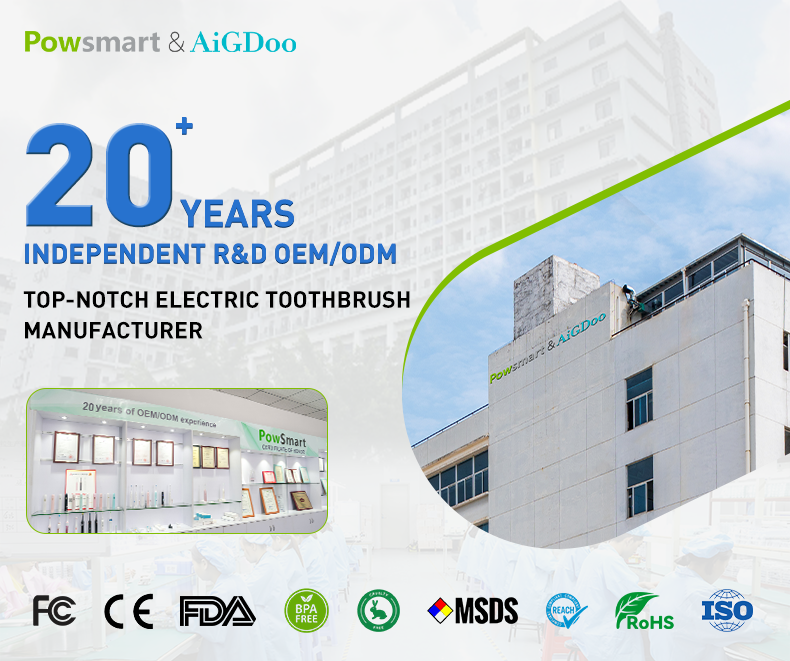
electric toothbrush export certification requirements vary significantly depending on target markets. For global brands and OEM buyers, understanding these differences is essential to avoid costly delays and compliance risks.
First, certification determines whether a product can legally enter a market. Without proper approvals, shipments may be rejected or delayed at customs.
Second, certification enhances brand credibility. Distributors and retailers often require documentation before cooperation.
Therefore, export compliance is not optional—it is a core part of product strategy.
Different regions follow different standards:
As a result, global brands must prepare multiple certifications simultaneously.
Instead of adjusting products later, compliance should start at the design stage.
For example:
Moreover, early alignment reduces redesign costs.
A professional OEM supplier plays a critical role in certification.
They typically:
In addition, experienced suppliers can recommend certification strategies based on target markets.
Explore certified-ready products here:
Electric Toothbrush OEM Manufacturing
To meet international requirements, brands usually need:
Furthermore, consistency across all documents is essential.
However, many companies encounter problems such as:
Consequently, these issues lead to delays and additional costs.
To efficiently handle multiple markets:
In addition, maintaining updated documentation ensures long-term scalability.
For global compliance insights, refer to:
International Electrotechnical Commission (IEC)
These standards help unify safety and testing requirements across regions.
Looking ahead, regulations are becoming stricter.
For instance:
Therefore, brands must stay proactive.
In conclusion, electric toothbrush export certification requirements are a complex but essential aspect of global business. By integrating compliance into product development and choosing the right OEM partner, brands can achieve smooth international expansion and long-term success.
.jpg)
Toddler Water Flosser Introduction | Guide for Kids’ First Teeth
stuck food removal water flosser | Water Flosser for Chick-fil-A Sauce
Maximizing Toothbrush Battery Life
Electric Toothbrush Supplier for Distributors
.jpg)
Did you know a magnetic-levitation sonic motor can deliver 31,000 powerful cleaning strokes per minute?
Sensitive Gum Care Electric Toothbrush Supplier
Do U-shaped Toothbrushes Actually Work? An OEM Manufacturer’s Analysis
Solving Electric Toothbrush Roll & Fall: Product Development Strategies for OEMs
Whitening for Date Night
Exploring electric toothbrush supplier evaluation?
USB Rechargeable Electric Toothbrush OEM: Modern Charging Solutions
Professional Teeth Whitening Device OEM Manufacturing
dental student toothbrush guide: pressure sensors
High Speed Sonic Toothbrush Manufacturer
Mouth Breathing Oral Care Guide: Water Flossers for Dry Gums

Does Your Climate Event Readiness Model Include Plans for Disaster Response Oral Care?


.jpg)
.jpg)
.jpg)
.jpg)
.jpg)






.jpg)