
In the era of connected devices, electric toothbrushes have evolved from simple mechanical tools to intelligent health companions. Modern smart toothbrush design integrates features like brushing feedback, app-based tracking, and Bluetooth connectivity to help users build better oral care habits.Yet, as features expand, one critical question arises: Does continuous Bluetooth connectivity significantly affect overall battery life of electric toothbrushes?
Bluetooth Low Energy (BLE) is designed for minimal power consumption. However, even low-energy protocols can impact the battery life of electric toothbrushes depending on how often data is transmitted and whether the connection remains active during brushing sessions or standby periods.
Continuous Bluetooth pairing — especially when transmitting real-time data to an app — may shorten charge intervals. For brands and OEM manufacturers, balancing data transfer frequency with energy efficiency is key to optimizing user experience.
While Bluetooth connectivity is often in the spotlight, several other elements affect overall electric toothbrush power consumption:
Motor efficiency: The vibration or oscillation speed draws the majority of power.
Battery capacity and chemistry: Lithium-ion and lithium-polymer cells offer different performance profiles.
Charging circuit design: Intelligent charging management extends battery lifespan.
Firmware optimization: Efficient code ensures minimal idle power drain.
In short, Bluetooth is only one piece of the puzzle — but it’s a piece that can be refined with better OEM battery optimization.
For oral care brands seeking manufacturing partners, OEM battery optimization becomes a critical differentiator. Leading OEMs integrate customized battery management systems that:
Regulate Bluetooth transmission intervals
Adjust sleep and wake cycles for microcontrollers
Use adaptive algorithms to predict usage patterns
Calibrate battery charging for maximum cycle life
This level of precision engineering ensures that even with advanced connectivity, the product maintains a competitive battery life and strong market appeal.
A successful smart toothbrush design doesn’t just focus on functionality—it harmonizes hardware, software, and user experience. Brands that work closely with their OEM partners can define how the Bluetooth module behaves under different scenarios (e.g., pairing, brushing, idle).
By implementing data caching or short transmission bursts instead of continuous streaming, designers can significantly reduce electric toothbrush power consumption without compromising connectivity quality.
Continuous Bluetooth connectivity does have a measurable impact on battery life, but through intelligent design and strategic OEM collaboration, we can reduce the impact.
For oral care brands, partnering with a manufacturing expert who understands bluetooth connectivity battery life, OEM battery optimization, and smart toothbrush design is essential for success.
In the competitive oral care market, the future belongs to toothbrushes that are not only smart — but also power-smart.https://www.powsmart.com/
.jpg)
Rechargeable Whitening Device OEM for Global B2B Brands

Developing a Portable Water Flosser? Need a Quiet Flosser Motor?
Demineralization Zones with Jaw Fatigue – Silent Threat?
Does Warranty Cover Motor Overheating in Electric Toothbrushes?
How Does Bulk Toothbrush Heads Wholesale Benefit from Innovative Electric Toothbrush Mold Design?
-3-scaled-1.jpg)
Teeth Whitening Tech: Is LED Scientifically Superior to UV for OEM Applications?
Need Water Flosser OEM Manufacturing for a New Cordless Water Flosser Manufacturing Line?
Electric Toothbrush Gift Set Supplier
-2-scaled.png)
Small Business – Health & Household Oral Care Products
Electric Toothbrush for IT Employees | Tech-Friendly Oral Care
Charging Corrosion with Mucosal Lesions – Fatal?
Can a Rechargeable Battery Solution Efficiently Power an LED Display Module?
pH Imbalance Plus Taste Distortion – Toxic?
Indicator Failure Leading Periodontal Pocket Deepening – Undetected?
Capitalizing on the LED Oral Care Boom: Essential Market Insights for Brands
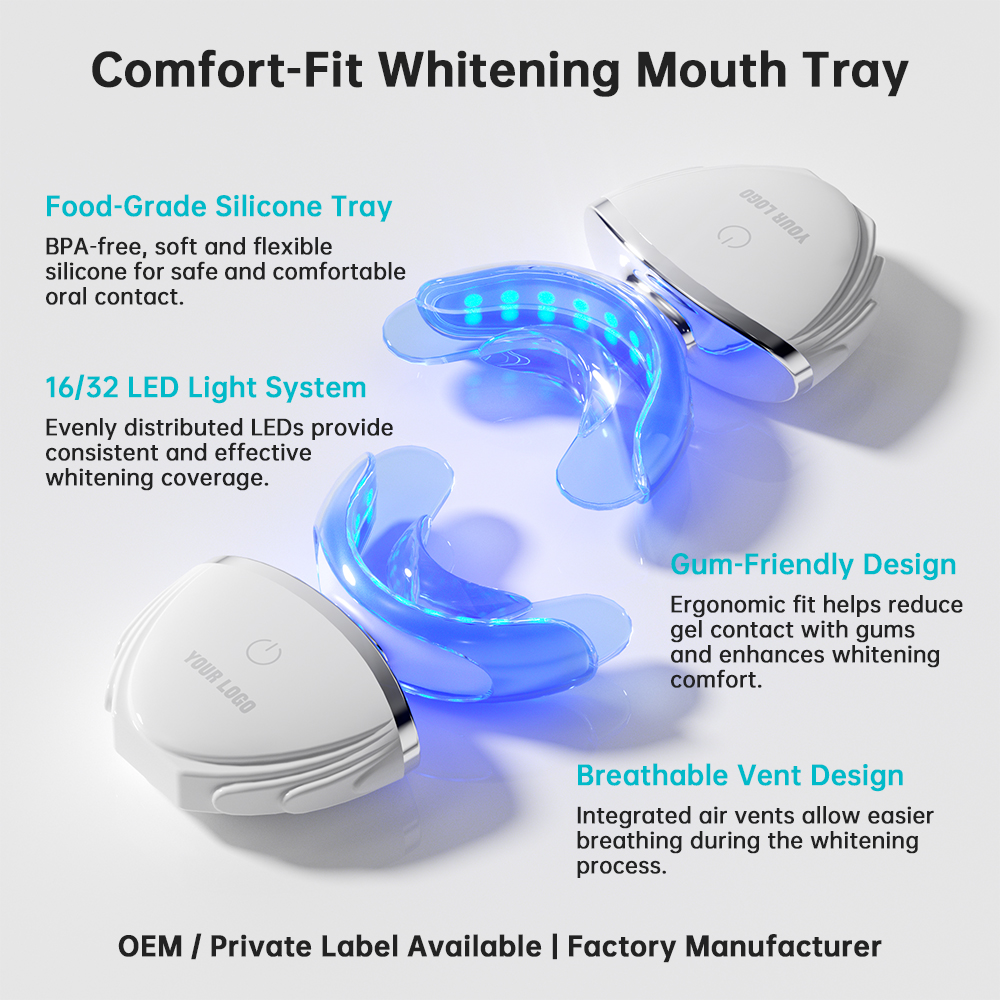
Can Custom Tray Design services coexist with Whitening Pen OEM production in a portfolio?


.jpg)
.jpg)
.jpg)
.jpg)
.jpg)






.jpg)
.jpg)