A bright, white smile is a common goal—but with so many at-home teeth whitening products on the market (strips, gels, trays, pens, powders), it’s hard to know which works. An at-home teeth whitening comparison is the solution: it breaks down the most popular products, their active ingredients, effectiveness, and safety, so you can choose a method that delivers results without damaging your teeth.
First, it’s important to understand why teeth discolor. There are two main types of stains:
- Extrinsic stains: On the enamel’s surface, caused by coffee, tea, wine, tobacco, or food (e.g., berries, soy sauce). These are the easiest to remove with at-home products.
- Intrinsic stains: Deep inside the enamel, caused by aging, medication (e.g., tetracycline), or excessive fluoride exposure as a child. At-home products can lighten mild intrinsic stains, but severe ones may need professional treatment.
The at-home teeth whitening comparison focuses on extrinsic stains and mild intrinsic stains—since these are the ones at-home products can address. For more insights on stain types, whitening ingredients, and product reviews to pair with your routine, you can visit https://www.powsmart.com/.
Common At-Home Whitening Products (From the At-Home Teeth Whitening Comparison)
The at-home teeth whitening comparison starts with the four most popular product categories, each with unique pros, cons, and effectiveness:
1. Whitening Strips
Whitening strips are thin, flexible plastic strips coated with a bleaching gel (usually 3–20% hydrogen peroxide or carbamide peroxide). They’re applied directly to the front of teeth and left on for 10–60 minutes per day, depending on the brand.
- How they work: The bleaching agent penetrates the enamel and breaks down stain molecules (called “chromophores”) into smaller, colorless particles. Most strips require 1–2 weeks of daily use to see results (1–2 shades lighter).
- Pros:
- Easy to use: No mixing or tools needed—just peel and stick.
- Affordable: Kits cost $20–$50 and last 2–4 weeks.
- Discreet: They’re clear, so you can wear them while working or doing chores.
- Cons:
- Limited coverage: Only cover the front 6–8 teeth, so back teeth or unevenly aligned teeth may not get whitened.
- Sensitivity risk: Higher peroxide concentrations (15%+) can cause temporary tooth sensitivity or gum irritation.
- Inconsistent results: They work best on extrinsic stains—mild intrinsic stains may only lighten slightly.
The at-home teeth whitening comparison notes that strips are great for beginners or anyone who wants a quick, affordable option—but they’re not the most powerful.
2. Whitening Gels with Trays
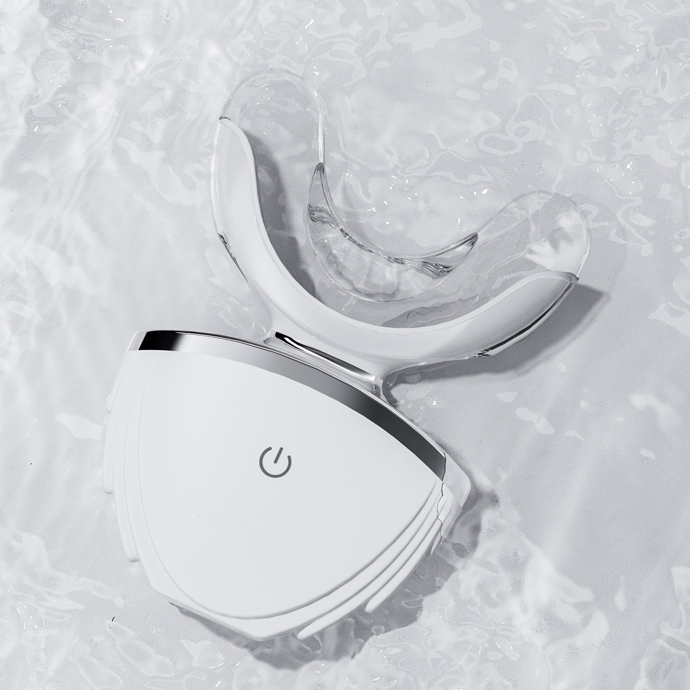
Whitening gels are thick, bleaching-based gels (10–35% carbamide peroxide) that come with custom or pre-fitted plastic trays. You squeeze the gel into the tray, wear it over your teeth for 30 minutes to 8 hours (often overnight), and repeat for 1–2 weeks.
- How they work: The tray holds the gel in direct contact with the teeth, allowing the bleaching agent to penetrate deeper than strips. Carbamide peroxide breaks down into hydrogen peroxide over time, so longer wear times (like overnight) boost effectiveness. Results are usually visible in 3–7 days (2–3 shades lighter).
- Pros:
- Full coverage: Trays fit all teeth (front and back), so whitening is more even.
- Adjustable strength: You can control how much gel you use, reducing sensitivity risk.
- Longer-lasting results: The deeper penetration means results last 6–12 months (vs. 3–6 months for strips).
- Cons:
- Trays can be uncomfortable: Pre-fitted trays may not fit perfectly, causing gel to leak onto gums (irritation risk).
- Time-consuming: Overnight wear means you can’t eat or drink while whitening.
- Higher cost: Kits start at $50–$100, and custom trays (made by a dentist) cost $200+.
The at-home teeth whitening comparison ranks gels with trays as the most effective at-home option—especially for mild intrinsic stains.
3. Whitening Pens
Whitening pens are small, portable tubes filled with a low-concentration bleaching gel (3–6% hydrogen peroxide). You twist the pen to apply a thin layer of gel directly to the teeth, wait 10–15 minutes for it to dry, and repeat 1–2 times per day.
- How they work: The gel forms a thin film on the teeth, and the low-concentration peroxide gently breaks down surface stains. They’re designed for “touch-ups” rather than deep whitening—results are subtle (0.5–1 shade lighter) and visible after 2–3 weeks.
- Pros:
- Ultra-portable: Fits in a pocket or purse, so you can touch up after coffee or wine.
- No sensitivity: Low peroxide concentration means minimal risk of irritation.
- Quick: Dries in 10 minutes, so you can use it on the go.
- Cons:
- Weak results: Only lightens surface stains—won’t work on intrinsic stains.
- Frequent reapplication: You need to use it daily for weeks to see even subtle results.
- Uneven coverage: It’s hard to apply a consistent layer, leading to patchy whitening.
The at-home teeth whitening comparison sees pens as a “supplement” to other whitening methods—not a standalone solution. They’re great for maintaining results after strips or gels.
4. Whitening Powders
Whitening powders are abrasive powders (often made with baking soda, charcoal, or silica) that you dip your toothbrush into and brush with like regular toothpaste. They work by physically scrubbing surface stains off the enamel.
- How they work: The abrasive particles gently polish the enamel, removing extrinsic stains (e.g., coffee, tobacco). They don’t contain bleaching agents, so they can’t lighten intrinsic stains. Results are visible in 1–2 weeks (1 shade lighter) with daily use.
- Pros:
- Natural ingredients: Many use baking soda or charcoal, which appeal to users who avoid chemicals.
- Easy to integrate: Just add it to your regular brushing routine (2 minutes per day).
- Affordable: Jars cost $10–$20 and last 1–2 months.
- Cons:
- Enamel damage risk: Overuse or aggressive brushing can scratch the enamel, making teeth more prone to staining long-term.
- Limited effectiveness: Only removes surface stains—won’t lighten teeth beyond their natural shade.
- Messy: Powders can be dusty and hard to apply without spilling.
The at-home teeth whitening comparison cautions against overusing whitening powders—they’re best for occasional surface stain removal, not regular whitening.
Key Ingredients to Look For (From the At-Home Teeth Whitening Comparison)
The at-home teeth whitening comparison emphasizes that ingredients determine both effectiveness and safety. Here’s what to know:
- Hydrogen peroxide: The most common bleaching agent in strips and pens (3–20% concentration). It works quickly but can cause sensitivity at higher concentrations.
- Carbamide peroxide: Used in gels (10–35% concentration). It breaks down into hydrogen peroxide slowly, so it’s gentler and better for overnight use.
- Baking soda: An abrasive and mild bleaching agent (found in powders). It’s safe in moderation but can scratch enamel if overused.
- Charcoal: A popular “natural” abrasive (found in powders). It’s effective at removing surface stains but has no bleaching properties—don’t expect it to lighten teeth beyond their natural shade.
- Potassium nitrate: A sensitivity reducer (added to many strips and gels). It blocks nerve signals in the teeth, reducing discomfort from peroxide.
Avoid products with “whitening” claims that don’t list these ingredients—they’re likely just polishing agents that won’t lighten teeth. The at-home teeth whitening comparison also warns against “too-good-to-be-true” products (e.g., “whiten 5 shades in 1 day”)—these often contain unsafe peroxide levels that can damage enamel.
Safety Tips (From the At-Home Teeth Whitening Comparison)
At-home whitening is safe when done correctly, but the at-home teeth whitening comparison highlights common mistakes to avoid:
- Don’t overuse products: Using strips or gels more often than recommended (e.g., twice a day instead of once) increases sensitivity and enamel damage risk.
- Stop if you feel pain: Temporary “tingling” is normal, but sharp pain or gum irritation means you need to pause use or switch to a lower-concentration product.
- Avoid whitening with sensitive teeth or cavities: Peroxide can seep into cavities and cause severe pain—fix dental issues first before whitening.
- Wait 30 minutes after eating/drinking: Acidic foods (e.g., citrus, soda) soften enamel, and whitening products can penetrate deeper, increasing sensitivity.
- Use a desensitizing toothpaste: Brush with a toothpaste containing potassium nitrate or fluoride before whitening—this reduces sensitivity.
How to Choose the Right Product (Based on the At-Home Teeth Whitening Comparison)
The at-home teeth whitening comparison helps you match the product to your goals, budget, and dental health:
-
If you want quick, affordable results for surface stains: Choose whitening strips. Look for ones with 10–15% hydrogen peroxide and potassium nitrate (to reduce sensitivity).
-
If you want deep whitening for mild intrinsic stains: Choose a gel with a tray. Opt for 10–20% carbamide peroxide and wear it for 30 minutes (not overnight) if you’re sensitive.
-
If you want to touch up results on the go: Choose a whitening pen. Use it after coffee or wine to maintain results from strips or gels.
-
If you prefer natural ingredients for surface stains: Choose a baking soda-based whitening powder. Use it 2–3 times per week (not daily) to avoid enamel damage.
-
Avoid at-home whitening if:
- You have severe intrinsic stains (professional whitening or veneers are better).
- You’re pregnant or breastfeeding (peroxide safety for fetuses/infants is unproven).
- You have braces, crowns, or veneers (whitening products won’t work on these—they’ll only whiten natural teeth, leading to uneven color).
Conclusion: The At-Home Teeth Whitening Comparison Takeaway
At-home teeth whitening works—but only if you choose the right product for your needs. The at-home teeth whitening comparison shows that there’s no “one-size-fits-all” option: strips are great for beginners, gels with trays for deep whitening, pens for touch-ups, and powders for natural surface stain removal.
The key to success is realistic expectations: at-home products can lighten teeth 1–3 shades, but they won’t match the 4–6 shade improvement of professional whitening. With proper use and safety precautions, you can achieve a brighter smile without damaging your teeth. For more product reviews, whitening routines, and oral care tips to maintain your results, visit https://www.powsmart.com/—your trusted resource for at-home oral care.
For additional clinical research on at-home whitening effectiveness and ingredient safety, you can refer to studies published on https://www.webmd.com/oral-health/teeth-whitening-overview.