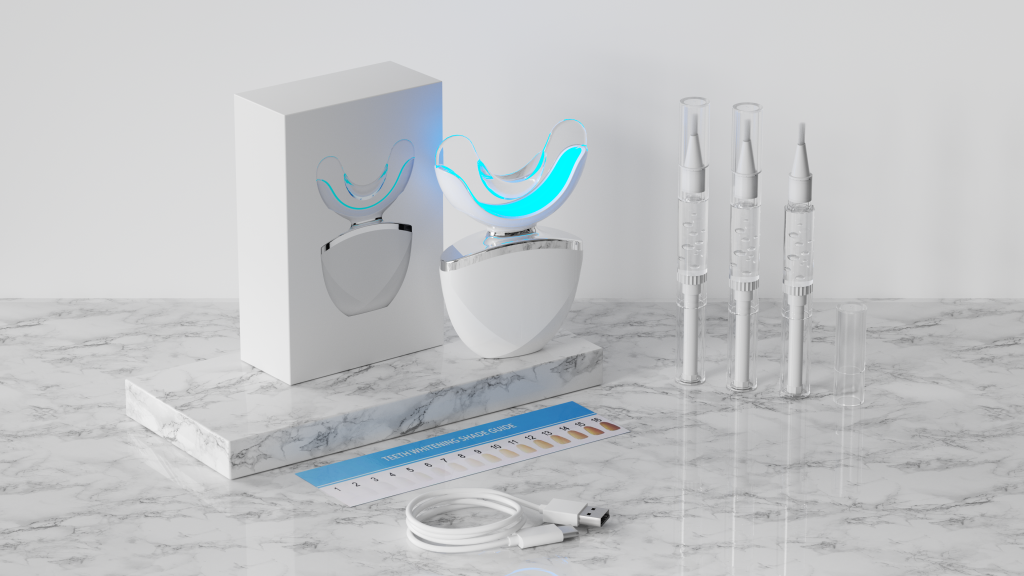
When it comes to professional oral care, Teeth Whitening Equipment and Gel Compatibility is often underestimated. For brands seeking to develop or expand their product line, understanding how equipment and gels work together is not just a technical consideration. It’s the foundation for whitening efficacy, regulatory compliance, and ultimately customer satisfaction. In this article, we will explore how OEM partnerships can help brand owners achieve seamless gel and equipment integration, ensuring optimal results in the marketplace.
Why Compatibility Matters
A successful teeth whitening system requires more than just a powerful light device or a high-quality gel. The teeth whitening system compatibility between both determines how effectively peroxide-based or non-peroxide gels activate under specific wavelengths, exposure times, and application protocols. Poorly matched systems can lead to reduced whitening efficacy, uneven results, or even customer complaints.
Gel and Equipment Integration at the Core of OEM Development
In OEM system design, gel and equipment integration is one of the first priorities. Manufacturers can fine-tune LED wavelengths, heat outputs, or timer settings to match the chemical properties of the whitening gel. This ensures the active ingredients perform consistently, delivering results that meet brand expectations.
Customization for Market Differentiation
OEM partners allow brand owners to co-develop systems that are unique in both function and design. From handheld portable whitening devices to professional chairside lamps, every piece of Teeth Whitening Equipment and Gel Compatibility testing becomes a point of differentiation. Brands can market their systems not just as another whitening kit, but as a tailored solution designed for optimal results and customer satisfaction.
Testing for Whitening Efficacy
A key part of system integration is laboratory and in-market testing. OEM partners usually conduct clinical trials or controlled performance studies to measure whitening efficacy. By simulating real use conditions, they ensure that the final product performs safely and consistently, maintaining trust in the brand and compliance with regional regulations.
Regulatory and Safety Considerations
Global markets impose different regulations on peroxide levels, light exposure, and device classifications. OEM manufacturers with expertise in teeth whitening system compatibility can help brands navigate these complexities. Proper gel and equipment integration reduces the risk of compliance failures, recalls, or negative feedback.
Delivering Optimal Results and Customer Satisfaction
Ultimately, Teeth Whitening Equipment and Gel Compatibility is about the end-user experience. Customers seek brighter smiles with minimal sensitivity, quick treatment times, and reliable outcomes. A well-integrated system ensures not only optimal results but also long-term customer satisfaction, reinforcing brand loyalty.
Conclusion
For oral care and cosmetic brands, choosing the right OEM partner is critical in achieving a seamless teeth whitening system compatibility. Through precise gel and equipment integration, brands can ensure high whitening efficacy, regulatory safety, and optimal results and customer satisfaction.
By investing in integration at the development stage, brand owners position themselves for success in a competitive market where results and trust define growth.
.jpg)
