Travel habits shape product expectations. For OEMs, brands and retail buyers, a toothbrush bundled with a thoughtfully engineered Travel Case is more than a convenience SKU — it’s a higher-attach, channel-friendly product that unlocks the Portable Oral Care segment. Below are six manufacturer-oriented dimensions (design, engineering, hygiene, charging, packaging and go-to-market) that explain why travel-ready electric toothbrushes win and what you must do to build one that actually performs in the real world.
Define the practical travel story — what “travel” actually means to buyers
First, be explicit about traveler personas. A business traveler values compactness and rapid top-ups; a family holiday buyer cares about hygiene and robustness; a backpacker prioritizes light weight and power-bank charging. Consequently, pick one or two target personas and tune the Travel Case and handle spec to those needs (size envelope, runtime, ruggedness). This clarity avoids over-featured products that neither travel light nor meet hygiene expectations.
Mechanical design & durability — case and handle engineered as a system
Next, design the Travel Case not as an afterthought but as a structural part of the product:
- Case form & protection: rigid or semi-rigid shells with internal foam or molded cradle to prevent head damage in transit.
- Head retention: captive slots or magnetic clips that lock heads in place and prevent bristle deformation.
- Drop & crush resistance: validate with repeated drop and compression tests representative of luggage handling.
- Materials: lightweight, food-grade plastics or thin recycled composites for weight and sustainability targets.
Therefore, the case protects the handle and heads and becomes a visible premium cue at retail.
Hygiene engineering — ventilated, drainable, and optionally sanitizing
Moreover, hygiene is the reason many consumers want a Travel Case for Portable Oral Care:
- Ventilation & drainage: vents or drainage channels prevent trapped moisture and reduce microbial growth after use.
- Removable inserts: dishwasher-safe trays or removable liners that users can dry or clean.
- Optional sanitizing: UV-C or antimicrobial-lined cases can be offered on premium SKUs, but only if you validate efficacy and include safety interlocks and clear instructions.
- Head separation: dedicated slots to avoid cross-contamination between family members.
In short, hygiene design reduces returns and increases consumer trust in travel use.
Charging strategy & battery UX — keep the handle ready on the go
Furthermore, travel success rests on how the toothbrush charges:
- USB-C fast-topup: supports power banks and laptop charging, enabling quick top-ups during short trips.
- Dock-in-case or pass-through: either embed a charging puck in the case or design a sealed contact so users can charge the handle while it’s stored. Alternatively, make the case charge via USB-C while the handle charges inductively.
- Runtime guarantees: aim for multi-week runtime (14–30 days typical) at normal use so users don’t rely on chargers.
- Battery safety: BMS protections, thermal sensors, and UN38.3-compliant cells for air travel safety documentation.
Consequently, charging choices affect weight, sealing, and regulatory logistics — so design them together.
Sealing, IP and travel environment resilience — salt, humidity and dust
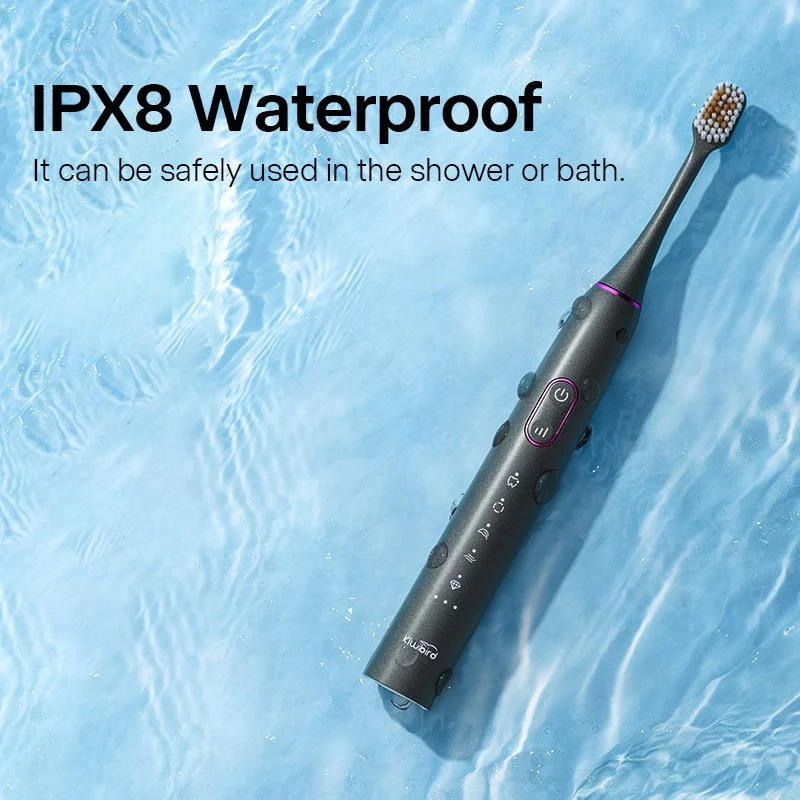
Also, travel exposes devices to humidity, beach salt spray, and dusty transport. Target an ingress protection rating appropriate to claims (e.g., IPX7 for immersion-resistant claims; at minimum splash resistance) and use corrosion-resistant contacts in magnetic docks. Moreover, conformal-coated PCBs and food-grade gasketing increase reliability and reduce after-sales incidents from travel environments.
Commercialization & channel execution — packaging, bundling and messaging
Finally, plan the commercial program to maximize sell-through:
- Product tiers: Basic Travel Case (rigid carry + vented tray), Travel+Charge (case with USB-C charging), and Premium Sanitizer (UV-C + power bank compatibility).
- Bundle & refill strategy: starter kit (handle + travel case + 1 head) with refill head packs and subscription hooks.
- Retail messaging: clear “days per charge,” case capacity (heads + handle), and hygiene cues on the box.
- Channel fit: prioritize duty-free, travel retail, business-class corporate gifts, and online “travel essentials” assortments.
Thus, the Travel Case becomes a merchandising and margin lever rather than a low-value accessory.
Quick 6-step action checklist for B2B teams
- Pick target traveler personas (business, family, backpacker) and lock case/handle tradeoffs.
- Engineer a protective shell with captive head retention and validated drop/crush tests.
- Design for hygiene: vents/drainage, removable liners, and optional validated sanitizing options (with safety interlocks).
- Choose a charging architecture (USB-C, inductive dock, or dock-in-case) and size battery/BMS for multi-week runtime.
- Specify IP and corrosion-resistant contacts; conformal coat electronics to survive environments.
- Create three commercial SKUs (Basic / Charged / Premium Sanitizer), bundle refills/subscriptions, and prepare clear friendly packaging and claims.
Conclusion:
A smartly executed Travel Case plus electric toothbrush converts a one-time appliance into an everyday companion and a recurring-revenue driver for brands. By engineering the case and handle together — focusing on protection, hygiene, charging, and channel fit — you unlock Portable Oral Care as a premium, high-attach segment rather than a drawer-dweller. If you want, I can produce a two-page travel spec (case materials, vent geometry, charge architecture pros/cons, and test scripts) to hand to your engineering and commercial teams. Contact us