.jpg)
As user expectations for high-precision oral care devices continue to rise, complaints involving sync disruption—particularly in sonic toothbrushes and high-frequency massaging tools—have become more than just performance issues. A new concern is emerging: lip sensitivity caused by seemingly minor inconsistencies in vibration, torque, or waveform synchronization. Could this pairing point to an overlooked design flaw? This article explores the mechanical-to-sensory link and outlines six key insights for manufacturers to avoid such unintended discomfort in end-users. What Is Sync Disruption in Oral Care Devices? Sync disruption refers to the loss of alignment between internal motion components—such as motor oscillation, head rotation, or pulse modulation—and the intended control signal. In products like sonic toothbrushes, facial brushes, or lip-care massagers, synchronization is essential for delivering a uniform and gentle touch. Disruption can occur due to: Firmware glitches or delayed signal feedback Mechanical backlash or gear misalignment Inconsistent power supply or battery lag Even microsecond-level timing mismatches can create unstable pulses, which are especially perceptible in sensitive areas like the lips. Why Are Lips Uniquely Sensitive to These Disruptions? The lip area contains a dense concentration of nerve endings, making it one of the most touch-sensitive zones on the human body. When sync disruption…
In the world of oral care product design, bristle splaying is often treated as a wear-and-tear inevitability. However, mounting clinical feedback suggests that splayed bristles—especially in poorly engineered toothbrush heads—may play a contributing role in gum recession, raising critical concerns for B2B buyers and ODM developers alike. Can this issue be effectively prevented through better materials and design? In this blog, we’ll analyze the root causes, risks, and preventive measures around this overlooked yet impactful defect. What Is Bristle Splaying, and Why Does It Matter? Bristle splaying refers to the outward bending or deformation of toothbrush filaments after extended use. It’s often caused by: Repetitive mechanical stress during brushing Inadequate filament resilience or tip processing Excessive moisture absorption or weak anchoring While seemingly minor, splayed bristles disrupt brushing dynamics, reducing plaque removal efficiency and increasing the risk of unintended pressure points on the gums. For users with sensitive gumlines, this change can turn routine brushing into a damaging experience. The Link Between Bristle Splaying and Gum Recession As bristles splay, they lose directional control. Instead of gliding smoothly along the tooth-gum margin, they begin to scratch, jab, or scrub at unnatural angles. This leads to: Localized trauma at the gumline…
In precision oral care or grooming devices, system-level reliability is key. Yet, in recent OEM failure analysis cases, one hidden yet recurring issue is gaining attention: indicator failure triggered by motor resonance. While at first glance, a blinking light or non-responsive LED may seem like an isolated electrical problem, the root cause often lies in mechanical vibration patterns. How exactly does motor resonance affect indicator circuits, and what can manufacturers do to prevent this cascade failure? What Is Motor Resonance and Why Does It Matter? Motor resonance occurs when a motor’s operational frequency aligns with the natural frequency of certain internal components—causing amplified vibrations. These can stem from: Poor axial balancing of rotating parts Structural cavity design without proper damping Inconsistent load due to nozzle blockage or gear imbalance Variations in input voltage under load In devices like sonic toothbrushes or water flossers, this phenomenon isn’t just about sound or feel—it creates ripple effects across the electronic subsystems, including the indicator module. Understanding Indicator Failure in the Field Indicator failure can present in several forms: Status LED flickers or turns off during operation Charging light fails to activate Mode or intensity lights become intermittent or completely non-functional In smart devices,…
In the world of oral care devices and small consumer electronics, two seemingly separate malfunctions—shaft fracture and indicator failure—can actually be symptoms of a deeper systemic flaw. While each issue alone can disrupt performance, their co-occurrence might point to underlying design or manufacturing challenges that B2B manufacturers must address. What Is a Shaft Fracture and Why Does It Happen? A shaft fracture typically refers to the mechanical breakage of the rotating or oscillating shaft that powers a toothbrush head or drive component. Common causes include: Material fatigue due to substandard alloys or improper heat treatment Overloading from improper torque distribution Misalignment during assembly or long-term wear Shaft integrity is fundamental to device longevity, especially in high-frequency applications like sonic toothbrushes or portable water flossers. Understanding Indicator Failure An indicator failure refers to the malfunction of a visual or tactile feedback component—commonly an LED or vibration alert—that informs users of power status, charging, or mode selection. Possible reasons include: PCB solder point damage from vibration Water ingress affecting signal circuits Faulty firmware or connection instability While these failures seem electronic in nature, they may share mechanical triggers with shaft issues. Company web:https://www.powsmart.com/product/electric-toothbrush/ Are Shaft Fracture and Indicator Failure Connected? Interestingly, evidence…
In recent quality audits, water dispersion irregularities and jet scattering anomalies have become a recurring concern in oral irrigator systems. While consumers may initially tolerate these issues, the long-term impact on cleaning effectiveness, component durability, and user satisfaction cannot be ignored. Are these symptoms merely surface-level flaws, or do they signal deeper design or manufacturing challenges? Understanding the Mechanics Behind Water Dispersion Water dispersion refers to the uncontrolled or non-uniform spreading of the water stream once it exits the nozzle. In precision-based devices such as dental irrigators, consistent flow is critical. When dispersion occurs, the water loses its directional focus, resulting in reduced impact pressure and ineffective debris removal. Root Causes of Jet Scattering Jet scattering typically accompanies water dispersion, manifesting as unpredictable or divergent spray paths. This may stem from several factors: Microscopic defects or uneven surfaces inside the nozzle tip Misalignment in pump-nozzle calibration Build-up of limescale or foreign particles disrupting water trajectory Such deviations can severely compromise a product’s perceived quality, especially in B2B scenarios involving dental professionals or healthcare retailers. Company web: https://www.powsmart.com/product/electric-toothbrush/ Component Design: Are We Prioritizing Form Over Function? In many OEM/ODM designs, aesthetic nozzle shaping or overly compact dimensions may unintentionally increase the risk…
Many manufacturers underestimate how quickly water ingress can lead to motor rust and cascade into costly performance failures. When moisture penetrates seals or housing, it does more than cause superficial corrosion—it actively damages the core electrical and mechanical components that drive your device. In this article, we’ll explore the mechanisms behind water ingress and motor rust, why this issue is often overlooked, and what manufacturers can do to prevent long-term damage. How Water Ingress Starts Water ingress describes any unintended infiltration of moisture into a device’s interior. This can occur through: Micro-cracks in the casing Worn-out gaskets Improper assembly Capillary action along wiringEven small amounts of condensation or splashes can gradually accumulate inside enclosed spaces, creating a humid microenvironment ideal for corrosion. Why Water Ingress Accelerates Motor Rust When moisture reaches the motor assembly, several problems emerge: Oxygen and water react with metal surfaces, forming rust on motor shafts, bearings, and laminations. Rust disrupts smooth rotation, increasing friction and energy consumption. Corrosion can also lead to pitting and structural weakening.Once motor rust has started, it’s difficult to reverse without replacing parts entirely. Early Warning Signs of Moisture Damage Recognizing the symptoms before failure occurs is critical. Watch for: A grinding…
In moisture-prone personal care devices like water flossers, electric toothbrushes, and oral irrigators, gasket mold is not only a common maintenance issue—it can also become a silent driver of bacterial regrowth. While often overlooked in design and aftersales guidance, this combination poses serious hygiene risks for end users. In this blog, we explore how these factors are connected, their implications for consumer health, and what manufacturers must do to ensure product safety. What Is Gasket Mold and Why Does It Form? Gaskets are typically made of rubber, silicone, or elastomer materials and serve as seals between components—such as water tanks and main bodies. However, the same flexibility and water resistance that make gaskets effective also make them vulnerable to: Moisture retention from repeated water exposure; Biofilm formation due to trapped organic matter; Poor airflow or drying design, especially in closed systems. When left uncleaned, these conditions foster the growth of gasket mold, which not only affects performance but becomes a microbial breeding ground. How Does Gasket Mold Trigger Bacterial Regrowth? The development of gasket mold creates an ideal environment for bacterial regrowth: Porous gasket materials can trap bacteria deep within microcracks, evading surface-level cleaning; Dark, damp enclosures offer perfect conditions…
In the development of oral care and medical-grade fluid devices, seal degradation is often an underestimated issue. However, when seal integrity is compromised, it can lead to unintended pressure irregularities, fluid leaks, or component misalignment—conditions that directly contribute to tissue trauma during user interaction. For B2B manufacturers and OEM/ODM partners, exploring this link is critical to reducing user complaints and enhancing product performance. What Is Seal Degradation? Seal degradation refers to the gradual breakdown of sealing materials used in devices such as water flossers, irrigators, or other pressurized instruments. This degradation may be caused by: Prolonged exposure to moisture, chemicals, or heat Repeated mechanical compression or tension Inferior material selection (e.g., low-grade silicone or rubber) Poor bonding during manufacturing Once degraded, seals can become brittle, lose elasticity, or even crack, resulting in a partial or complete loss of containment. How Degraded Seals Disrupt Fluid Dynamics When a seal begins to fail, pressure regulation becomes unstable. This often results in: Sudden water spurts or drops in pressure Fluid leakage around the nozzle or base Internal backflow into unintended compartments This unstable delivery system is not only inefficient—it may also direct water or air at unpredictable angles and intensities, inadvertently causing tissue…
As the oral care device industry moves toward smarter and more efficient products, two recurring challenges have drawn the attention of both OEM/ODM manufacturers and end-users: weak vibration and sensor failure. While either issue alone can impact performance, their combination presents a serious threat to product reliability, user satisfaction, and brand credibility. But is this double malfunction an avoidable design flaw—or an inevitable risk of advanced technology? What Causes Weak Vibration in Sonic Devices? Weak vibration in sonic toothbrushes or oral irrigators usually stems from: Motor degradation due to prolonged use or substandard components; Power supply inconsistencies such as battery voltage drops; Loose internal connections caused by assembly errors or material fatigue. When vibration intensity weakens, plaque removal efficiency plummets, compromising the primary function of the device. Customers may feel the product is ineffective or defective, triggering complaints and returns. Understanding Sensor Failure in Oral Care Devices Simultaneously, sensor failure—whether pressure sensors, position detectors, or usage timers—leads to operational inaccuracy. Common reasons include: Faulty PCB design or low-grade electronic components; Software glitches causing misinterpretation of user input or position; Environmental factors like moisture ingress or temperature fluctuations. A failed sensor may not detect excessive brushing pressure or incorrect positioning, raising…
In the realm of water flossers and similar oral care devices, one of the most frequently overlooked but critical problems is nozzle blockage, which directly leads to pressure loss. This issue not only reduces cleaning efficiency but also affects user satisfaction, perceived product quality, and even long-term brand trust. But how exactly are these two factors connected, and what should manufacturers do to prevent this seemingly minor flaw from becoming a serious functional failure? What Is Nozzle Blockage and How Does It Occur? Nozzle blockage refers to the partial or complete obstruction of the water outlet tip in a water flosser or oral irrigator. This issue can arise from multiple sources: Mineral buildup from hard water over extended use; Accumulated debris or plaque residues not flushed out during regular cleaning; Manufacturing defects such as inconsistent nozzle molding or foreign particles trapped during assembly. Regardless of the cause, a blocked nozzle restricts water flow, setting the stage for noticeable performance issues. Why Does Nozzle Blockage Lead to Pressure Loss? In water flosser operation, consistent water pressure is critical to dislodge food particles and plaque from between teeth. When a nozzle blockage occurs: Water flow is restricted, reducing outlet velocity; The pump…
In the world of electronic personal care devices such as electric toothbrushes and water flossers, two hidden yet severe risks often go unnoticed by end users—battery leakage and subsequent circuit corrosion. While each problem alone can compromise product performance, their combination poses a much greater threat to both device lifespan and user safety. Are these two failures merely coincidental, or are they intrinsically linked in a dangerous cycle that manufacturers cannot afford to ignore? What Is Battery Leakage and Why Does It Occur? Battery leakage occurs when the internal chemical contents of a battery escape from its sealed casing. This usually happens due to: Overcharging or improper charging practices; Use of low-quality or aged battery cells; Physical damage to the battery structure during assembly or usage; Extreme storage conditions such as high humidity or temperature fluctuations. When leakage happens, the corrosive electrolyte materials can spread inside the device, setting the stage for further internal damage. How Does Battery Leakage Lead to Circuit Corrosion? The leaked electrolyte is highly conductive and chemically aggressive. Upon contact with the device’s inner components, especially the circuitry, the following chain reaction occurs: Metal traces and solder points on the circuit board oxidize; Insulation barriers weaken,…
In the development and quality control of electric personal care devices, such as sonic toothbrushes or water flossers, the simultaneous occurrence of pulse instability and unexpected noise spikes often signals a deeper issue within the motor system. These symptoms are not to be dismissed as minor annoyances—in fact, they may be early warnings that the motor is nearing the end of its functional lifespan. But is the motor really dying, or are these signs of something fixable? hat Is Pulse Instability and Why Does It Occur? Pulse instability refers to irregular fluctuations in the electrical pulses delivered to the motor, causing inconsistent performance. The causes include: Aging motor components such as brushes or bearings degrading over time; Poor circuit design that fails to regulate voltage or current properly; Faulty or loose electrical connections leading to intermittent power delivery; Environmental factors such as humidity or corrosion affecting internal contacts. When pulses become unstable, the motor's rotation speed or oscillation frequency changes unpredictably, affecting device performance and user experience. What Causes Noise Spikes in Motorized Devices? Noise spikes—sudden increases in operational sound levels—are often symptomatic of: Imbalanced rotating parts, such as worn or misaligned rotors; Friction buildup in the motor shaft or…
In the world of electronic appliances, especially those designed for personal care such as electric toothbrushes and oral irrigators, two critical risks demand serious attention: Short Circuit and Water Leakage. When these two issues occur simultaneously, the potential hazards multiply—not only threatening device performance but also putting user safety at considerable risk. Are manufacturers unknowingly playing with fire if they overlook this dangerous combination? Understanding the Relationship Between Short Circuit and Water Leakage Water and electricity are natural enemies. A Water Leakage—whether from a poorly sealed tank, damaged O-rings, or cracked casings—can directly result in moisture reaching sensitive electronic components. Once inside, this moisture can lead to a Short Circuit, where electrical pathways are unintentionally bridged. This not only causes the device to malfunction but also increases the chance of overheating or sparking. For OEM suppliers, ensuring IPX7 or higher waterproof standards during design and testing is the first step to prevent this chain reaction. Why the Double Risk Is More Dangerous Than It Seems While either Water Leakage or a Short Circuit is harmful on its own, their combination represents an amplified threat. A Short Circuit caused by internal moisture does not only lead to product failure—it can result…
In the field of sonic toothbrush manufacturing, button malfunction and uneven bristles might seem like unrelated issues at first glance. However, increasing customer feedback indicates that these two flaws can interact, resulting in product failure, reduced brushing efficiency, and poor user experience. Is this truly an overlooked disaster in oral care design—or a preventable manufacturing defect? How Button Malfunction Triggers Bristle Deformation A button malfunction, such as a stuck or delayed power button, can unintentionally cause the motor to operate erratically. This leads to: Over-vibration during rest periods; Unplanned sudden start/stop cycles; Extended high-speed running without load. Such irregular operation strains the brush head, causing uneven bristles over time as the fibers wear at different rates due to inconsistent pressure and motion. The Role of Uneven Bristles in Brushing Inefficiency Uneven bristles are not merely a cosmetic problem—they seriously undermine brushing quality. They cause: Incomplete plaque removal in certain areas; Over-scrubbing of gum tissue, raising the risk of irritation or recession; Imbalanced motor load, increasing the chance of future button malfunction due to feedback strain on internal electronics. In B2B production, such flaws can damage the brand’s reputation and result in costly product returns. Company web: https://www.powsmart.com/product/electric-toothbrush/ Root Causes Behind Button…
In the manufacturing and supply of electric personal care devices, two frequently overlooked but critical issues are Charging Failure and Handle Cracking. These problems not only impact the product’s functionality but also jeopardize its lifespan and user satisfaction. When these two issues occur simultaneously, the risk of total device failure significantly increases. This article explores why these faults arise and provides practical guidance for B2B manufacturers on how to identify and resolve them efficiently. Understanding the Root Causes of Charging Failure Charging Failure in electric devices, such as toothbrushes and water flossers, can originate from various points in the system: Damaged Charging Ports: Repeated use, contamination, or oxidation of the charging contacts can prevent effective power transfer. Circuit Malfunction: Poor-quality PCBs or faulty battery management systems (BMS) disrupt the charging cycle. Battery Degradation: Aged or inferior batteries may no longer accept or retain charge, leading to performance drops. Detecting the true source of Charging Failure is critical before proceeding with corrective actions to avoid misdiagnosis and unnecessary component replacement. The Hidden Threat of Handle Cracking Simultaneously, Handle Cracking is another issue that can silently develop during the product’s lifecycle: Material Fatigue: Prolonged exposure to moisture, temperature shifts, and mechanical stress…
For manufacturers and brands in the oral care industry, customer complaints about Gum Bleeding caused by Enamel Scratches are no longer rare. With the rise of sonic toothbrushes, water flossers, and dental devices, users are increasingly sensitive to oral discomfort and damage. But does this mean manufacturers or OEM/ODM suppliers need to panic? This article explores how Enamel Scratches occur, why they trigger Gum Bleeding, and what design or material flaws may be the root cause—especially in products intended for daily use. The Hidden Connection Between Enamel Scratches and Gum Bleeding While enamel and gum tissue are distinct, their health is closely interrelated. Enamel Scratches—even micro-level ones—can lead to sharp edges or rough surfaces on toothbrush bristles or flossing nozzles. When such compromised surfaces come in contact with sensitive gum tissue, Gum Bleeding can easily result. This risk becomes higher in products where bristle quality, nozzle coating, or polishing processes are insufficiently controlled. Moreover, once enamel is scratched, the underlying tooth structure may become more prone to bacterial retention, leading to localized gum inflammation—another indirect cause of Gum Bleeding. Key Product Design and Material Issues Leading to Enamel Scratches Several hidden design or material flaws in oral care products can…
In the manufacturing of consumer electronics and precision appliances, problems such as Handle Cracking and Connector Corrosion are often underestimated, yet they play a critical role in determining the overall lifespan and reliability of the device. For OEM and ODM partners, understanding how these two failure modes impact product durability is essential to optimizing design, reducing warranty claims, and maintaining market competitiveness. What is Handle Cracking? Handle Cracking refers to the development of visible or internal fractures in the plastic, rubber, or composite material used in the handle of a device. This issue is common in products that are subjected to repeated mechanical stress, exposure to moisture, UV radiation, or temperature cycling. When cracks form in the handle structure, they compromise both the mechanical strength and the sealing capability of the device. Over time, handle cracking can lead to water ingress, contamination of internal components, or a loss of structural integrity—all factors that contribute to premature product failure. The Risks of Connector Corrosion Connector Corrosion occurs when metal contacts in electrical connectors are exposed to moisture, salts, or corrosive environments. This leads to oxidation or material degradation that increases electrical resistance, causes intermittent connections, or even total circuit failure. Connector…
In the highly competitive world of oral care device manufacturing, ensuring product comfort and safety is essential to maintaining brand credibility and customer satisfaction. Two critical factors that directly impact user experience are Tooth Sensitivity and Unstable Vibration. When a sonic toothbrush exhibits inconsistent vibration patterns, it may not only reduce cleaning efficiency but also exacerbate tooth sensitivity issues for end-users. This article explores how these factors are interrelated and what manufacturers must consider to mitigate potential risks. Understanding Tooth Sensitivity in the Context of Oral Care Devices Tooth Sensitivity refers to discomfort or pain that occurs when teeth are exposed to certain stimuli such as cold, heat, pressure, or vibrations. Users with enamel erosion, gum recession, or exposed dentin are particularly vulnerable to this problem. For these individuals, even standard oral care routines can trigger unpleasant sensations if not carefully managed by the product design. Sonic toothbrushes are designed to deliver high-frequency vibrations for effective plaque removal. However, when these vibrations become Unstable, they may deliver uneven forces to the tooth surface, contributing to microscopic enamel wear or nerve irritation, ultimately worsening Tooth Sensitivity. Causes of Unstable Vibration in Electric Toothbrushes Unstable Vibration in toothbrushes usually stems from design…
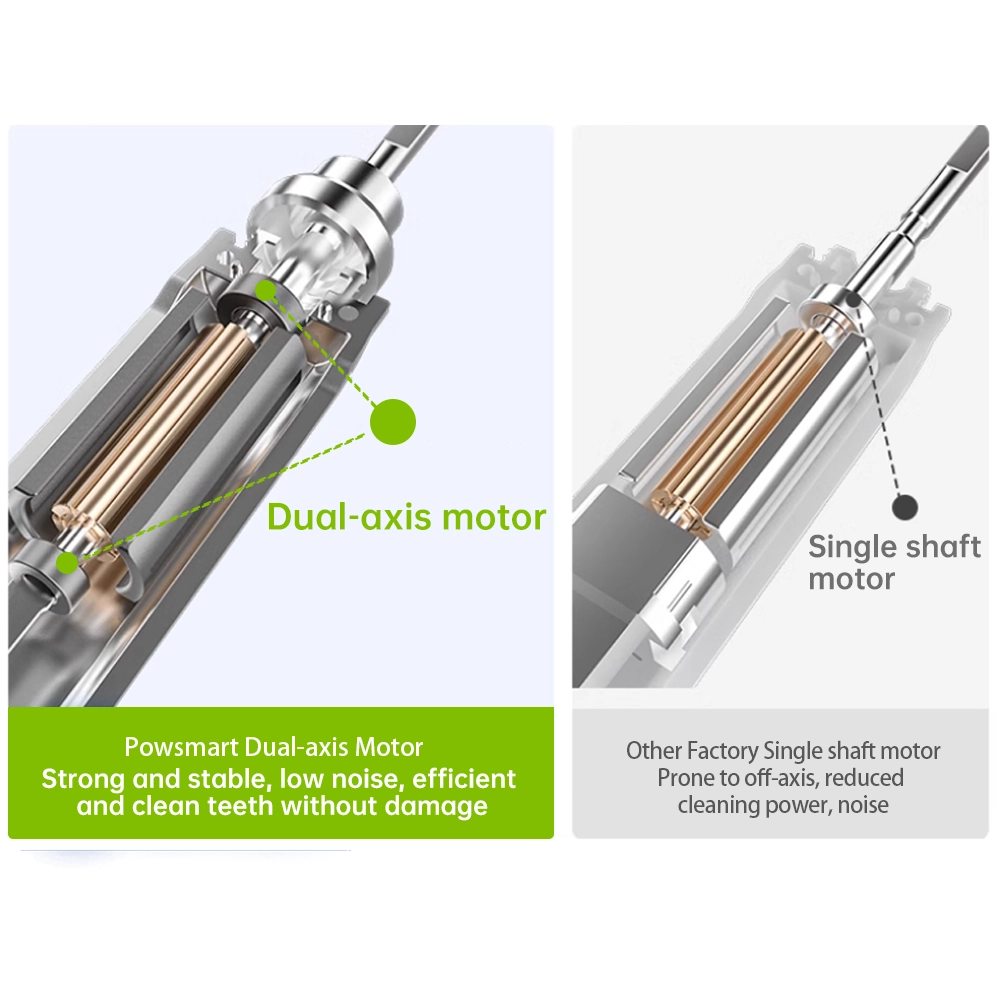
As the global demand for electric toothbrushes continues to grow, selecting the right technology for your brand’s product line is more critical than ever. Whether you are launching a new oral care brand or expanding your existing portfolio, understanding the differences between sonic vibration and rotary vibration technology is essential for aligning with both market trends and user expectations. This technology comparison will explore the performance, user experience, and manufacturing implications of both electric toothbrush vibration technologies, helping brand owners make informed sourcing decisions. https://www.powsmart.com/product/electric-toothbrush/ Overview of Electric Toothbrush Vibration Technologies In the electric toothbrush market, two main types of vibration mechanisms dominate: comparison of sonic vibration and rotary vibration technology. Sonic Vibration uses high-frequency side-to-side movements—usually at 20,000 to 40,000 strokes per minute. This technology relies on fluid dynamics to clean beyond direct contact, reaching between teeth and along the gumline. Rotary Vibration Technology involves oscillating or rotating brush heads, typically at a lower frequency (around 5,000 to 10,000 rotations per minute). These brushes often clean by direct mechanical action and are particularly effective at polishing tooth surfaces. Understanding these foundational differences is the first step in evaluating product strategy and manufacturing options. Cleaning Efficiency and User Experience From a consumer perspective, both technologies offer…
In the design and manufacture of electronic devices, particularly those intended for portable or high-performance applications, Vibration Weakening and Circuit Short are two critical risk factors that can significantly impact product reliability and safety. While these issues are often analyzed separately, recent failure analyses suggest a strong connection between vibration-induced mechanical wear and the increased likelihood of electrical short circuits. For OEM and ODM manufacturers, understanding this relationship is crucial to minimizing defect rates and ensuring long-term product durability. What is Vibration Weakening? Vibration Weakening refers to the gradual reduction in structural or mechanical integrity of components due to continuous or repeated exposure to vibration. This phenomenon is common in battery-powered portable devices such as electric toothbrushes, grooming tools, or industrial handheld equipment. Frequent vibration can loosen screws, degrade solder joints, wear down plastic mounts, and shift internal assemblies out of alignment. As the internal structure becomes unstable, the device may experience performance degradation, audible noise, and even malfunction. Understanding Circuit Short A Circuit Short (short circuit) occurs when an unintended connection forms between two conductive paths, allowing current to bypass its designated route. This can cause excessive current flow, overheating, and potentially catastrophic failures such as component burn-out or…


.jpg)
.jpg)
.jpg)
.jpg)
.jpg)



.jpg)