.jpg)
Our patented structural design underpins every aspect of our electric toothbrushes—from sealing integrity to ergonomic form—delivering unmatched reliability and performance. By rethinking internal frameworks, component interfaces, and assembly methods, we’ve unlocked a range of advantages that translate directly into cost savings, differentiation, and end-user satisfaction for our B2B partners. Superior Water Resistance and Durability First, our patented multi-layer sealing architecture eliminates water ingress at critical joints: Triple O-Ring Barriers around the motor shaft prevent moisture penetration even under IPX7 wash-down tests. Overmolded Bond Lines fuse handle and head interfaces into a single seamless unit, reducing stress points. Corrosion-Proof Internal Frame made from stainless and polymer composites resists long-term electrolyte exposure. These measures extend device lifespan and slash warranty claims. Precision Motion Transfer for Cleaner Results Next, the patented drive coupling ensures nearly loss-free power delivery to the brush head: Helical Gear Alignment maintains perfect meshing under load, translating motor torque into consistent oscillation amplitude. Floating Shaft Bearings self-adjust to brush-head tolerances, preventing wobble and ensuring full bristle engagement. Optimized Kinematic Linkages deliver the exact stroke length specified in clinical studies for maximum plaque removal. The result is a uniform, high-efficiency clean every time. Ergonomic Form Factor and User Comfort Moreover,…
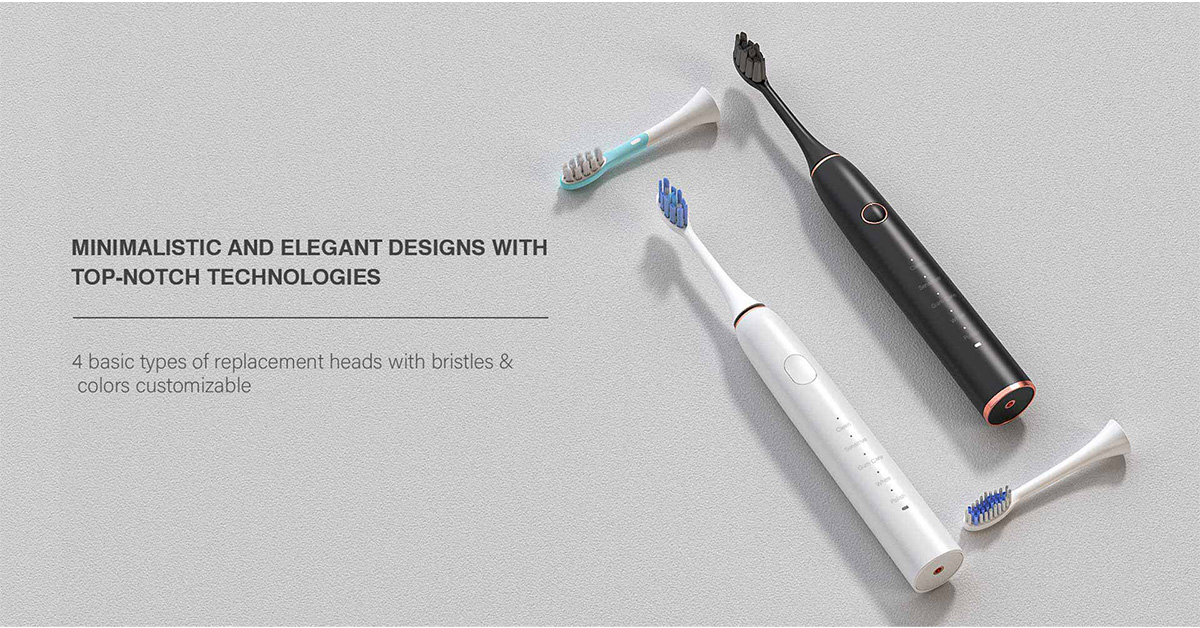
When selecting a high-quality electric toothbrush, the design and performance of the bristles are critical—they directly impact plaque removal and gum health. Below are six key factors for B2B partners to consider when specifying premium bristle solutions. Material Selection: Nylon vs. Advanced Polymer Fibers First, common bristle materials include nylon (e.g., DuPont Tynex™) and emerging polymer composites: Nylon Bristles offer excellent flexibility and abrasion resistance at a controllable cost for mass production. Advanced Polymer Fibers (such as PBT or PLA blends) combine heat resistance, antimicrobial properties, and biodegradability. Recommendation: Offer both options in your product lineup to meet entry-level and premium market needs. Material differentiation empowers B2B manufacturers with versatile customization. Hardness Ratings: Soft, Medium, and Firm Bristles Next, bristle stiffness directly affects comfort and cleaning efficacy: Soft Bristles: Ideal for sensitive gums and post-treatment patients to minimize mechanical irritation. Medium Bristles: The everyday standard—balanced cleaning power and comfort. Firm Bristles: Best for heavy stains, used with low-speed modes and shorter session durations. Recommendation: Provide mixed-stiffness brush heads and synchronize with brush modes for all-in-one versatility. Layered hardness options ensure you cover diverse user requirements.Company web:https://www.powsmart.com/product/electric-toothbrush/ Filament Diameter & Density: Precision Coverage Bristle thickness and density determine how well the…
In the fiercely competitive market for electric toothbrushes, mastering self-developed motors technology not only boosts product performance but also significantly reduces procurement costs and supply-chain risks. For B2B manufacturers, in-house motor development represents core differentiation—delivering higher brand value and customer loyalty. Enhanced Performance: Precision Control & Energy Efficiency First, a self-developed motor can be custom-tuned to match brush head design and vibration modes: Amplitude & Frequency Optimization: Tailor winding and magnetic circuit to maximize plaque removal in sonic or oscillation modes. Intelligent Power Management: Built-in drive algorithms maintain cleaning power even at lower RPMs, greatly extending battery life. Noise Reduction: Refine gears and bearings for quieter operation, improving user comfort. These performance gains let manufacturers highlight their motor’s superiority in technical datasheets. Lower Costs: Autonomous, Resilient Supply Chain Next, in-house motors strengthen supply-chain resilience: Localized Components: Produce key parts—magnets, housings, rotors—internally, reducing reliance on imported subassemblies. Economies of Scale: High-volume production drives down per-unit motor cost, boosting overall gross margins. Rapid Iteration: Internal R&D cycles eliminate external lead times, speeding innovations from prototype to market. Cost advantages enable B2B partners to offer more competitive pricing and faster delivery.Company web:https://www.powsmart.com/product/electric-toothbrush/ Quality Assurance: Traceability & Durability Moreover, self-developed motors allow end-to-end quality…


.jpg)
.jpg)
.jpg)
.jpg)
.jpg)






.jpg)

.jpg)