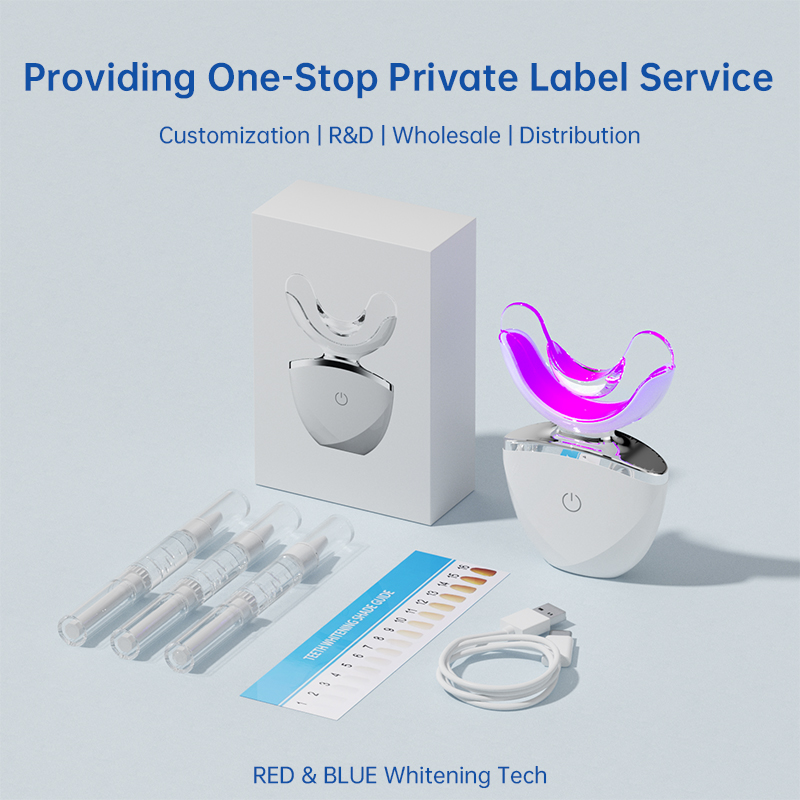
The core of any red and blue light teeth whitening device lies in its photobiological mechanism — the “Principle of red and blue light teeth whitening.” This whitening device uses specific wavelengths of visible light to activate the whitening gel or stimulate biological tissue, offering safe and effective results.
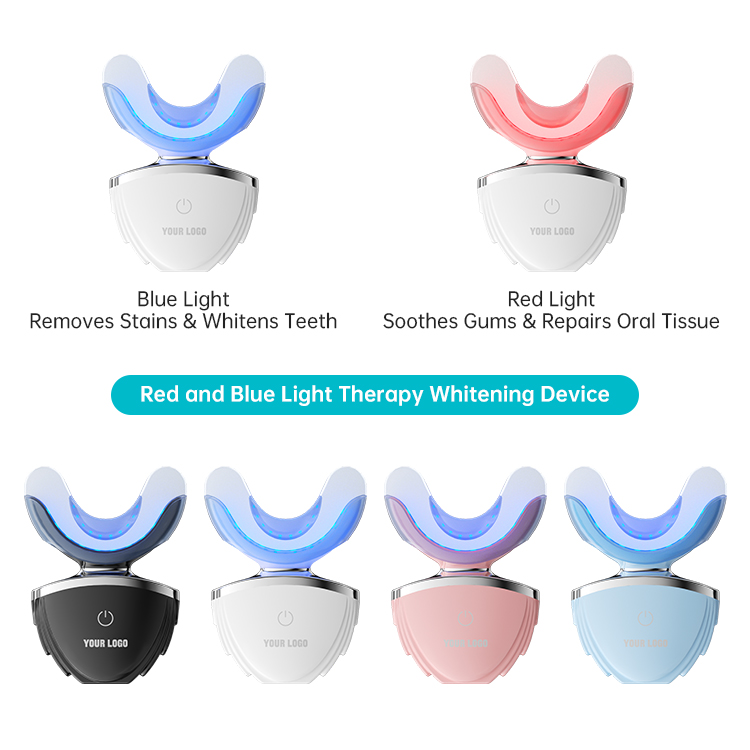
Blue light, typically at 460nm, is used for its ability to activate hydrogen peroxide or carbamide peroxide in whitening gels. This reaction generates free radicals that break down pigmented molecules on the surface of the enamel, resulting in visible whitening. Most importantly, the 460nm “Blue light wavelength is safe” — it is within a non-ionizing range and doesn’t harm enamel or soft tissues when used correctly.
Red light, usually at 630nm, plays a supportive yet crucial role. While it doesn’t bleach the enamel, red light stimulates microcirculation in the gum tissue and promotes healing and anti-inflammatory effects. This means “Red light assists in restoration,” reducing discomfort during whitening treatments and accelerating tissue recovery.
-2-1024x576.png)
One of the key advantages of this technology is its safety profile. Unlike UV light or abrasive whitening methods, the 460nm blue light used in these devices is non-thermal and low-penetration, making it safe for teeth and gums. This justifies the confidence behind the phrase “Blue light wavelength is safe.”
Red light’s therapeutic wavelength ensures enhanced comfort during treatment, especially for users with sensitive teeth or receding gums. Its anti-inflammatory and cell-repairing functions reduce post-treatment sensitivity, a benefit summarized as “Red light assists in restoration.”
Furthermore, high-quality whitening devices incorporate design features like temperature-controlled LED chips, timed pulse emission, and power stabilization to ensure a safe and comfortable user experience. These devices are well-suited for use in both professional settings and at-home kits.
As consumers become increasingly aware of the benefits of non-invasive and tech-enhanced oral care, the market for light-based whitening solutions is growing rapidly. Red and blue light whitening devices offer a modern alternative to peroxide-only products and UV-based systems.
For B2B brands and distributors, this presents a strong opportunity. By partnering with manufacturers who specialize in the “Principle of red and blue light teeth whitening,” businesses can offer customizable whitening devices that are safe, effective, and market-ready.
The global market—particularly in North America and Europe—favors safe, clinical-grade whitening solutions. OEM or private label red and blue light devices with features such as app control, sleek design, and low sensitivity potential can significantly enhance a brand’s portfolio.
The red and blue light whitening device is where science meets oral care innovation. Grounded in the proven principles that “Blue light wavelength is safe” and “Red light assists in restoration,” it offers an effective and comfortable whitening experience. For oral care brands looking to expand or upgrade their product line, this technology offers not only performance but also consumer trust.
Dentistry Instrument Factory Market Trends and Customized Production Solutions
Impact of Using Teeth Whitening Equipment and Gel Together – OEM System Design

Ways Having Whiter Teeth Can Help Boost Your Confidence
How Does a Photobleaching Catalyst Interact with Optical Brighteners in Advanced Whitening Formulations?

sonic electric toothbrush factory
.jpg)
powsmart adult electric toothbrush
Professional Whitening Electric Toothbrush Supplier | Advanced LED Oral Care by Powsmart
Reasons why brands should start teeth whitening kit business
OEM of Teeth Whitening Device: A Complete Solution from LOGO Printing to Light Wave Mode Customization
Private mold development of Red and Blue Light Teeth Whitening Device: Shell Material Selection and Ergonomic Design Points
The Future of Teeth Whitening Devices: Trends and Innovations in Manufacturing
-3-scaled.png)
Home vs. Professional Red and Blue Light Teeth Whitening Devices: Wavelength Stability and Energy Density Comparison
Smart Toothbrush India | Modern Oral Care Solutions
Does Cold-Light Teeth Whitening Aggravate Enamel Wear?
Home-Use Whitening Lamp OEM | Custom LED Dental Light Manufacturer
Is Blue Light Under 480nm Safe for Teeth Whitening Devices?


.jpg)
.jpg)
.jpg)
.jpg)
.jpg)






.jpg)
.jpg)