electric toothbrush durability testing plays a decisive role in OEM manufacturing, especially for brands targeting mid-to-high-end international markets.
For B2B buyers, durability is not only a product feature but also a risk-control mechanism. Poor durability leads to high return rates, warranty claims, and brand reputation damage. Therefore, systematic testing becomes a non-negotiable requirement during product development and mass production.
Why Durability Testing Is Critical for OEM Projects
Unlike consumer-level inspections, OEM durability validation focuses on long-term usage simulation. Electric toothbrushes are exposed to moisture, vibration, temperature changes, and repeated mechanical stress over extended periods.
As a result, hidden structural weaknesses often appear only after thousands of usage cycles. Durability testing identifies these risks before market release, which significantly reduces post-sale issues.
Mechanical Stress and Continuous Vibration Testing
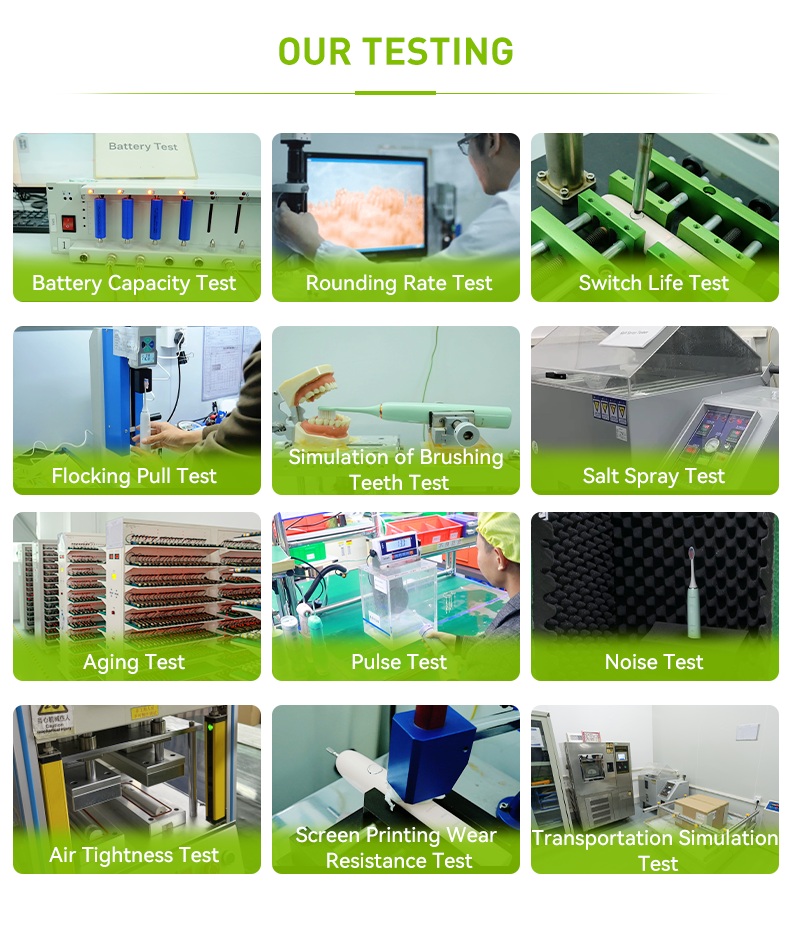
Sonic toothbrushes operate at high-frequency vibration levels. Continuous vibration testing evaluates motor stability, internal fixation strength, and housing resonance.
During testing, products are run under extended operating cycles that simulate months or years of daily brushing. Consequently, abnormal noise, performance degradation, or component loosening can be detected early.
Waterproof and Moisture Resistance Validation
Waterproof performance is essential for bathroom-use devices. Testing includes immersion, splash exposure, and pressure resistance evaluation.
Additionally, long-term moisture aging tests assess sealing materials and bonding performance. Therefore, water ingress risks are reduced before mass shipment.
Drop, Impact, and Structural Integrity Testing
Drop tests simulate accidental falls from sinks or countertops. After impact, internal alignment, electronic stability, and external housing integrity are inspected.
Repeated impact testing helps OEM manufacturers optimize internal cushioning structures and material thickness. As a result, accidental damage rates decrease significantly.
Button, Shaft, and Connection Fatigue Testing
Buttons and moving parts experience frequent user interaction. Fatigue testing evaluates switch durability, shaft alignment, and internal wear over repeated operations.
Moreover, charging port connections undergo insertion and removal cycle testing. This ensures stable electrical performance throughout the product lifecycle.
Battery and Charging Cycle Aging Tests
Battery aging tests simulate repeated charging and discharging cycles. Capacity retention, charging stability, and thermal behavior are closely monitored.
Consequently, performance degradation trends are identified early, allowing design adjustments without increasing after-sales risk.
Environmental and Temperature Stress Testing
Products are exposed to temperature and humidity variations to evaluate material expansion, PCB stability, and battery safety.
Because electric toothbrushes are shipped globally, environmental validation ensures consistent performance across different climates.
Documentation and Compliance for B2B Buyers
Durability testing results are documented and reviewed before approval. These records support compliance audits, customer evaluations, and regulatory submissions.
Furthermore, standardized reports improve trust during B2B negotiations.
You can review OEM electric toothbrush solutions with validated durability standards at:
👉 https://www.powsmart.com
For international durability and safety testing references, manufacturers commonly follow IEC standards:
👉 https://www.iec.ch
Conclusion
Comprehensive electric toothbrush durability testing ensures long-term reliability, reduces warranty exposure, and strengthens confidence for global OEM partners.


.jpg)
