Bringing a private brand electric toothbrush to market can be a powerful way for oral-care brands to grow, differentiate, and compete. However, the process comes with a critical challenge: how to avoid infringement—including design, IP, and patent violations. Whether you work with an OEM or ODM manufacturer, ensuring legal compliance from concept to shipment is essential to protect your business from costly disputes and delays.
Below is a practical, manufacturer-oriented guide to help brand owners navigate this landscape safely and confidently.
Start With a Thorough IP Landscape Check
Before approving any design or sample, conduct a comprehensive review of existing IP rights, including:
-
Design patents
-
Utility patents
-
Trademarks
-
Copyright
This step ensures your chosen toothbrush shape, vibration technology, or charging method doesn’t violate existing patents. Many brand owners skip this step and only discover infringement risks late in production—when changes become expensive.
Tip: Ask your OEM partner whether they have completed an IP screening or can provide patent search support, especially for new brush head models.
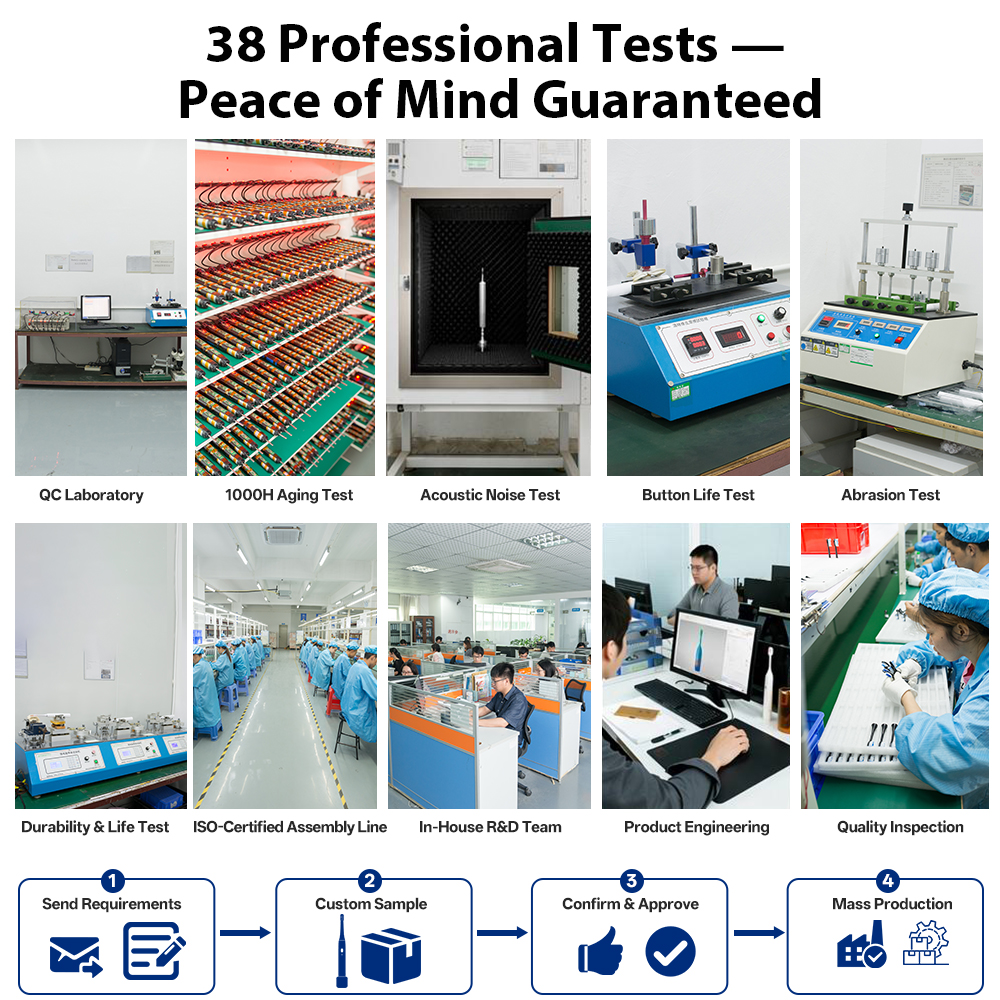
Choose OEM Manufacturers With Strong Legal Compliance Systems
Not all manufacturers maintain robust OEM legal compliance standards. Select partners who:
-
Document the origin of every component
-
Provide IP-cleared designs
-
Have internal compliance teams
-
Offer certificates of originality for molds and structures
A reliable factory should be able to clearly explain which parts they designed, which are licensed, and which require extra authorization.
Avoid Copying Popular Market Designs
Many new brands try to mirror the appearance of top electric toothbrushes, but similar design elements may already be protected. To truly avoid infringement, brands should:
-
Request custom structure drawings
-
Adjust handle contours, button layout, and LED display design
-
Create an original brush head shape
Even small customizations can help you build a distinctive identity and reduce IP conflict risks.
Secure Written Agreements Covering IP Ownership
To prevent disputes later, formalize everything in writing:
-
Ownership of tooling, molds, and design files
-
Rights to the final design
-
Non-infringement guarantees
-
Liability and compensation terms
A solid written agreement ensures that your designer, OEM partner, and brand are aligned on all IP rights from the start.
Validate Product Features Against International Patent Rules
Advanced electric toothbrush functions—sonic vibration, wireless charging, magnetic levitation motors—may be patented in certain regions. If your brand plans to sell globally:
-
Confirm your product does not violate active patents in the target markets
-
Ask the manufacturer for documentation of patent expiration
-
Consider licensing technology where needed
This is particularly important for brands targeting the U.S., Europe, Japan, or South Korea, where patent enforcement is strict.
Conduct Pre-Launch IP Audits Before Mass Production
Before approving mass production or shipment, conduct a quick but thorough final audit:
-
Check for trademark availability
-
Review packaging artwork
-
Confirm brush head design uniqueness
-
Ensure no third-party images or protected elements are used
A final verification round can save your private label brand from costly recalls or customs seizures.
Conclusion
Developing a private brand electric toothbrush is exciting—but navigating IP challenges is essential for long-term success. By choosing the right OEM partner, conducting early IP screening, maintaining strong agreements, and following a compliance-first approach, brand owners can confidently avoid infringement and build a sustainable, legally protected product line.