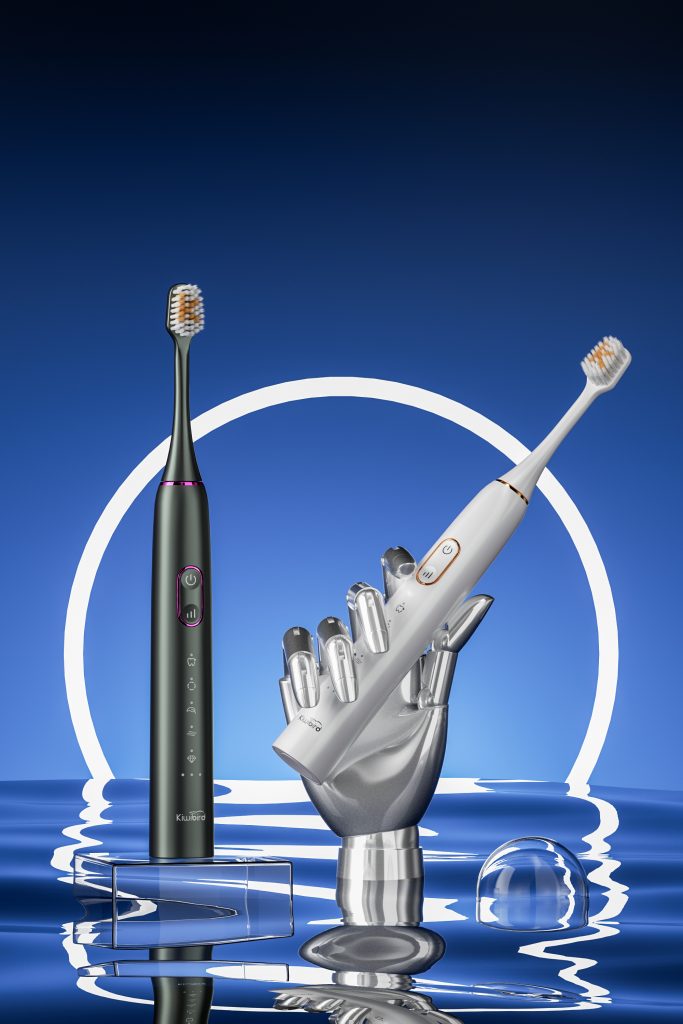
When buying committees, campus bookstores, and student-first D2C teams evaluate oral-care SKUs, one product repeatedly wins: the College essential toothbrush. For B2B manufacturers, that’s not accidental — it’s the result of a specific set of product and commercial attributes that map perfectly to student life. Below are six concrete reasons (with manufacturer-focused implications) why this SKU leads the Student oral care category — and how to design, validate, and commercialize a toothbrush that students actually keep using.
Utility first: solves real campus pain points
Students need simple, reliable products. Therefore a College essential toothbrush succeeds because it addresses the top student friction points: shared bathrooms, irregular charging access, small storage, and tight budgets.
- Product implications: prioritize multi-week runtime (≥14–21 days), compact form factor, vented travel caps, and a quiet motor.
- Commercial implication: highlight “fits locker / lasts exam season” benefits in campus POS and product copy to shorten the buyer’s decision loop.
Clean hygiene + low-maintenance — built for shared living
Moreover, students care about hygiene but dislike chores. Consequently, a winning College essential toothbrush makes head replacement and drying obvious and low-effort, improving real-world Student oral care outcomes.
- Product implications: quick-drain head geometry, vented travel case, non-porous filaments (PBT/nylon), and easy head swaps.
- Operational implication: package refills in flat, stackable bundles for campus kiosks and subscription mailers.
Simple UX & robust ergonomics — minimal learning, maximal adoption
Furthermore, time-poor students favor devices that “just work.” Thus the College essential toothbrush often uses very simple controls (one-button operation), clear visual cues, and a handle that’s easy to grip between classes.
- Product implications: large tactile button, soft-start motor, gentle haptics for quadrant cues, and durable overmold for drops.
- GTM implication: demo units at campus bookstores convert better when the UX requires zero app setup to start.
Price-performance sweet spot — perceived value beats features
In addition, students are price-sensitive but willing to pay for perceived lasting value. So a College essential toothbrush that balances a compelling cleaning experience with an accessible price point becomes a top candidate in Student oral care lists.
- Product implications: invest in an efficient motor and prismatic pouch cell while trimming cosmetic complexity (one-color overmold, no unnecessary embellishments).
- Commercial implication: offer starter bundles (handle + 1 head + vented cap) plus optional subscription discounts to drive refill attach and predictable LTV.
Portable charging & universal compatibility — chargers that travel with students
Also, students move between dorm, library and home. Therefore compatibility matters: USB-C charging (and optional magnetic puck) plus low-charge reminder UX are differentiators that make a toothbrush “college-ready.”
- Product implications: USB-C PD support, accurate fuel gauge, and power-bank-friendly charge profiles.
- Channel implication: include campus-friendly chargers or local power-bank bundle offers via campus retail partners.
Channel fit & lifecycle economics — easy to stock, easy to keep selling
Finally, the College essential toothbrush fits campus channels and lifetime economics: compact SKUs, low RMA rates, and refill subscription potential. That’s why procurement teams recommend them in student starter packs and orientation bundles.
- Business implications: design for low assembly cost, modular repairability (motor or battery sled), and thin-pack refill logistics to reduce last-mile cost.
- Measurement: track campus attach rate, refill subscription uptake, and early RMA causes to iterate quickly.
Conclusion — Quick action checklist (6 steps)
To build a College essential toothbrush that tops Student oral care lists:
- Target 14–21 days runtime, quiet motor, and compact geometry.
- Engineer vented travel caps, quick-drain heads, and easy head-swap mechanics.
- Implement a one-button UX with clear haptics/LED cues and ruggedized overmold.
- Optimize BOM for price-performance: efficient motor + prismatic cell + minimal cosmetics.
- Use USB-C PD charging and test with common power banks; document charge profiles.
- Pilot on campus: place demo units in bookstores, run a small orientation bundle pilot, and measure refill attach and RMA reasons at 30/90 days.
If you’d like, I can draft a campus-ready product spec (dimensions, target runtime table, head geometry targets, quick-pack bundle list, and pilot KPI dashboard) so your engineering and commercial teams can move from concept to campus shelves. Contact Powsmart

.jpg)
