In the dental beauty industry, safety and compliance are crucial for both manufacturers and consumers. To ensure product quality, manufacturers must obtain necessary certifications, such as FDA and CE, before entering global markets. This article explores the FDA and CE certification process for dental beauty devices, helping factories navigate the regulatory landscape.
Understanding FDA and CE Certifications
FDA Certification
The U.S. Food and Drug Administration (FDA) regulates medical devices, including dental beauty devices, to ensure they meet safety and performance standards. Depending on the risk classification, manufacturers may need to submit a 510(k) premarket notification or a Premarket Approval (PMA) application.
CE Certification
The CE mark indicates compliance with European Union safety, health, and environmental requirements. To obtain CE certification, manufacturers must comply with Medical Device Regulation (MDR 2017/745) and undergo a conformity assessment, often involving a Notified Body.
Key Requirements for FDA and CE Compliance
Risk Classification
Devices are classified based on their potential risks:
FDA: Class I (low risk), Class II (moderate risk, requiring 510(k)), Class III (high risk, requiring PMA).
CE: Class I, IIa, IIb, III, with stricter requirements for higher-risk devices.
Safety and Performance Testing
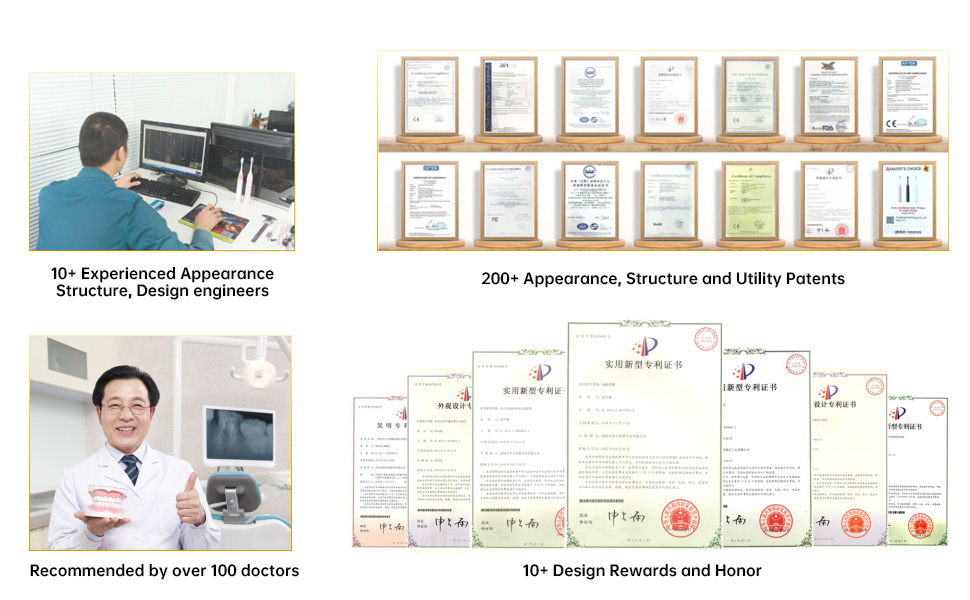
To ensure the compliance of dental beauty devices, manufacturers must conduct biocompatibility testing, electrical safety tests (IEC 60601-1), and clinical evaluations to demonstrate product safety.
Quality Management Systems (QMS)
Compliance requires an effective QMS, such as ISO 13485, which outlines procedures for medical device design, production, and post-market surveillance.
The FDA Certification Process for Dental Beauty Devices
Device Classification – Identify the correct class based on FDA guidelines.
Premarket Submission – Submit a 510(k) or PMA, depending on classification.
Testing and Documentation – Provide test reports, clinical data, and manufacturing details.
FDA Review and Clearance – The FDA reviews the submission, inspects facilities, and grants approval.
The CE Certification Process for Dental Beauty Devices
Classification and Conformity Route Selection – Identify the correct device class.
Technical Documentation Preparation – Submit a comprehensive dossier with risk analysis and testing results.
Notified Body Assessment – If applicable, a Notified Body reviews and audits the device and QMS.
Declaration of Conformity & CE Marking – Once approved, the manufacturer can affix the CE mark.
Common Challenges in Certification
Regulatory Updates: Both FDA and CE regulations evolve, requiring continuous compliance efforts.
Clinical Data Requirements: Manufacturers must provide robust clinical evidence for higher-risk devices.
Manufacturing Consistency: Ensuring consistent quality and compliance of dental beauty devices throughout production is essential.
Conclusion
Achieving FDA and CE certification for dental beauty devices is a complex but necessary process for manufacturers entering global markets. By understanding classification, testing, QMS, and submission procedures, factories can ensure compliance and market access. Partnering with regulatory experts can further streamline the approval process, ensuring efficiency and success.https://www.powsmart.com/
.jpg)
