In the global oral care industry, product consistency and reliability are critical for brand success. Electric toothbrush production process quality control plays a decisive role in ensuring that every unit meets performance, safety, and durability standards required by international markets.
As competition continues to intensify, buyers are no longer focused solely on price. Instead, they increasingly prioritize manufacturers with strong process control capabilities. Therefore, understanding how quality is maintained throughout production has become essential for B2B buyers.
First of all, production quality directly determines customer satisfaction and brand reputation.
If manufacturing processes are not properly controlled, defects may occur at different stages. As a result, this can lead to product returns, negative reviews, and even regulatory issues.
Moreover, inconsistent quality often causes supply chain instability. Therefore, implementing a systematic control framework is essential for manufacturers serving international clients.
In addition, strict process control helps reduce waste and improve efficiency. Consequently, it benefits both suppliers and buyers in the long term.
To fully understand quality control, it is necessary to analyze each production stage in detail.
At the beginning of production, raw materials must be carefully selected and tested.
This includes:
Each batch is inspected to ensure compliance with safety and performance standards. Therefore, potential risks can be identified at an early stage.
Injection molding is one of the most critical stages in manufacturing.
During this process, precise control is required for:
If these parameters are not properly managed, defects such as deformation or surface imperfections may occur.
As a result, manufacturers must implement strict monitoring systems to ensure consistency.
The motor is the core component of an electric toothbrush.
Therefore, its assembly must follow strict technical requirements.
Key control points include:
In addition, automated equipment is often used to improve accuracy and reduce human error.
Electronic systems must be tested before final assembly.
This includes:
Because of these tests, potential electrical failures can be prevented before products reach the market.
During final assembly, all components are combined into a finished product.
At this stage, manufacturers must ensure:
Furthermore, standardized procedures are followed to maintain consistency across production batches.
Production lines are monitored continuously.
For example:
As a result, issues can be corrected immediately.
Regular sampling is conducted throughout production.
This helps verify:
Therefore, manufacturers can identify trends and prevent large-scale defects.
All processes follow documented SOPs.
Because of this, workers can perform tasks consistently, regardless of production volume or complexity.
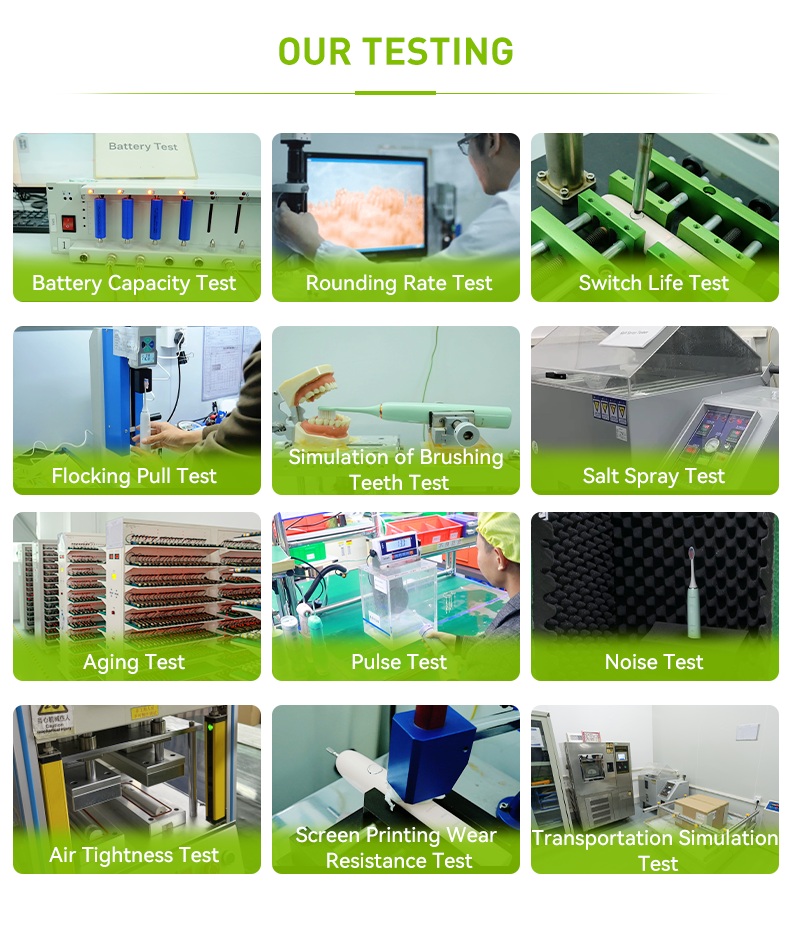
Before shipment, finished products undergo comprehensive testing.
Each unit is tested for:
Electric toothbrushes must meet waterproof standards such as IPX7 or IPX8.
Products are tested for long-term use.
This includes:
For high-quality electric toothbrush manufacturing solutions, visit:
https://www.powsmart.com/electric-toothbrush/
For global quality control standards, refer to:
https://www.iso.org
https://www.sgs.com
When selecting a supplier, buyers should assess multiple factors.
Experienced manufacturers are more likely to have stable processes.
Buyers should verify:
Complete records are essential.
These include:
Reliable manufacturers implement continuous improvement practices.
Despite advanced systems, several challenges may still arise.
Variations in materials or environment can affect production.
Manual operations may introduce inconsistencies.
If equipment is not properly maintained, defects may occur.
Therefore, preventive maintenance is essential.
To overcome these challenges, manufacturers adopt several strategies.
Automated systems reduce human error and improve precision.
Regular training ensures that workers understand quality requirements.
Upstream suppliers must also meet strict standards.
In conclusion, electric toothbrush production process quality control is a fundamental aspect of ensuring product consistency, safety, and performance in global markets.
Therefore, B2B buyers should prioritize manufacturers with strong process control systems, advanced testing capabilities, and continuous improvement practices.
By doing so, businesses can reduce risks, enhance brand reputation, and achieve long-term success in the competitive oral care industry.
.jpg)
pericoronitis water flosser help: gentle irrigation
LED Electric Toothbrush Product Customization
Teeth Whitening Device Durability Test for OEM Manufacturing Reliability

How Does Bulk Material Sourcing Contribute to Cost-effective Production?

How Does Spare Parts 3D Printing Reduce the Need for Inventory Financing Solutions?
Can Duty Drawback Recovery Service Increase the ROI of Your In-country Value Addition Strategy?
Electric Toothbrush for Mid Range Market Supplier: Balanced Cost and Performance Strategy
Why Partner with a Global Logistics Partner under a Contract Manufacturing Agreement?
Sonic Toothbrush OEM China Manufacturing for Global B2B Brands
High Speed Sonic Toothbrush Manufacturer
Does Cognitive Load Reduction Design Require an Emotionally Intelligent Chatbot for Customer Support?
Need an Orthodontic Clinic Water Flosser and Tongue Cleaner Attachment Wholesale for Your Practice?
Electric Toothbrush Distributor Newport Beach California
Dark Chocolate Teeth Stains | Proven Whitening Methods for Regular Chocolate Eaters
Electric Toothbrush Brush Head Replacement OEM

Why Must Your Whitening Gel Formulation Adhere to Aesthetic Device Compliance Regulations?


.jpg)
.jpg)
.jpg)
.jpg)
.jpg)