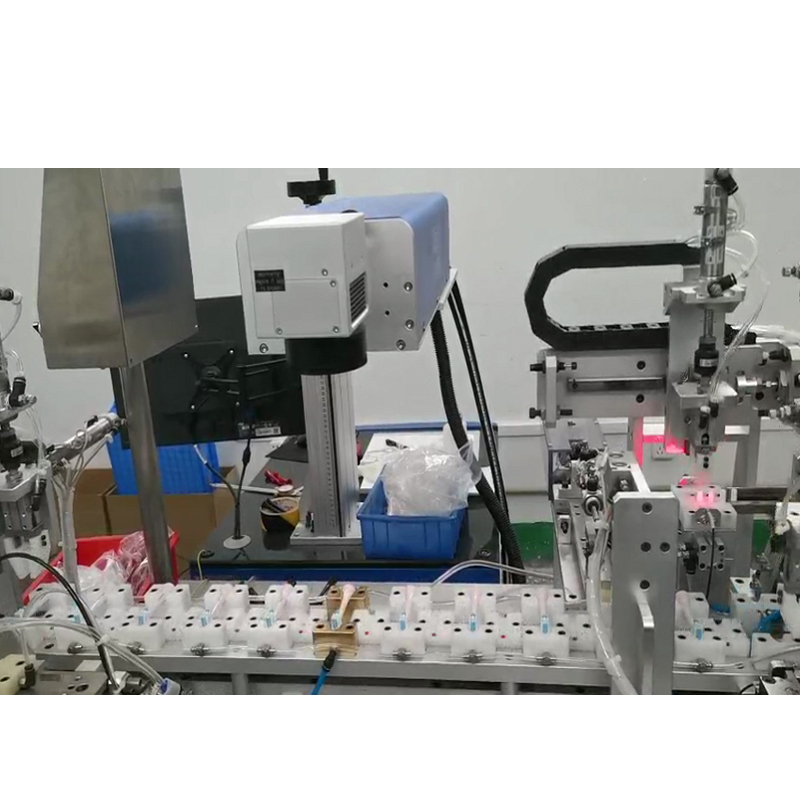
In today’s competitive oral care market, Electric toothbrush laser engraving is more than just decoration—it’s a core part of brand identity and consumer recognition. For electric toothbrush factories, offering toothbrush laser engraving customization adds value, enhances brand consistency, and ensures that the logo remains clear and durable throughout the product’s lifecycle. Laser engraving, as a permanent LOGO process, is widely favored because it doesn't fade, peel, or wear off like ink printing. But achieving high-quality engraving depends heavily on fine-tuning the right parameters: depth, speed, and power. Understanding the Basics of Laser Engraving Parameters To achieve precise and durable results, manufacturers must control three key laser engraving parameters: Power (W): Determines how much energy is delivered to the surface. Higher power increases depth but may burn or deform soft plastics. Speed (mm/s): Dictates how fast the laser moves. Faster speeds result in lighter engravings; slower speeds go deeper but may overheat the material. Depth (mm): Not a directly set parameter, but the result of how power and speed interact. For toothbrush handles (usually ABS or PP), ideal depth is 0.1–0.3 mm. Proper tuning ensures the OEM brand logo looks sharp, professional, and permanent on every unit. Material Consideration: Matching Settings to Handle Composition Electric…
With the rise of cold-light whitening systems, more end users report allergy reactions—including oral burning, redness, and ulcers. When investigating root causes, we must look beyond bleaching formulations to the cold-light risks embedded in the device, since light wavelength, power density, and exposure time can magnify chemical irritation. Interaction of Cold Light and Bleaching Agents Cold-light devices emit blue light in the 420–450 nm band to accelerate peroxide decomposition, enhancing whitening speed. However, over-activated free radicals can attack mucosal barriers, combining chemical and photonic stress that triggers allergy reactions. Allergens—Light Source vs. Ingredients Although peroxide and sensitizing flavorings are primary allergens, studies show: High-Intensity Blue Light can alter saliva pH and protein structures, increasing mucosal permeability to external chemicals. Photosensitivity in certain users leads to phototoxic reactions, such as oral mucosal erythema. Thus, cold light isn’t merely a harmless adjunct—its spectral profile demands careful evaluation. Cold-Light Risks in Device Design A closer look at hardware reveals potential hazards: Lack of Optical Filtration: Direct shortwave emission without diffusion optics concentrates energy. Power Overdrive: Oversized output for rapid results elevates mucosal temperature and chemical reactivity. Inadequate Cooling: Heat buildup in the cold-light module increases agent corrosiveness. Enhancing optical design and thermal management…
whstapp
whstapp
National Toll-Free Service Hotline
+86 755 86238638

.jpg)
.jpg)
.jpg)
.jpg)
.jpg)






.jpg)